

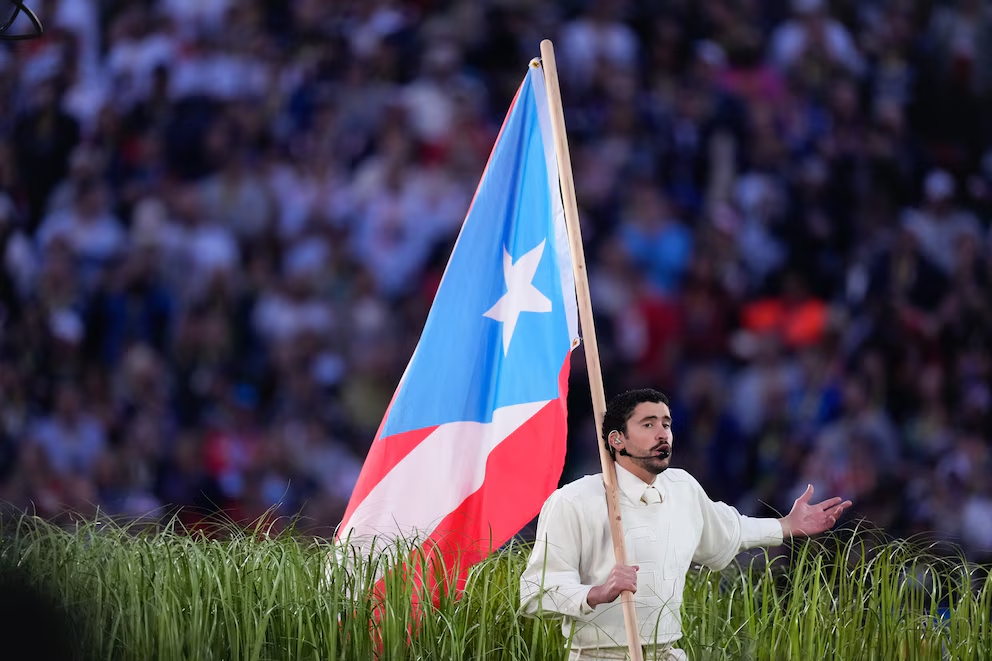
As the sun was setting over Levi Stadium in Santa Clara, California, millions of viewers tuned in to watch Bad Bunny deliver a historic Super Bowl halftime show.
Bad Bunny, whose real name is Benito Antonio Martínez Ocasio, delivered a highly anticipated halftime show that generated excitement among fans long before kickoff. As the most-watched sporting event in the United States, the NFL’s decision to feature a primarily Spanish-speaking artist drew widespread attention. The league leaned into Bad Bunny’s cultural influence, with the halftime show with the message, “the world will dance.”
Puerto Rican Culture Takes Center Stage
Bad Bunny highlighted his Puerto Rican roots by incorporating visuals of sugar cane fields, a symbol deeply tied to the island’s history, throughout the performance. He performed chart-topping hits including, “Tití Me Preguntó” and “Voy A Llevarte Pa” alongside personal favorites such as “Yo Perreo Sola.”
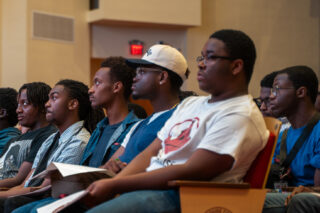
Spelman College student Cyann Leverett ’29 said the performance authentically represented her culture. “Bad Bunny’s halftime show did an excellent job of putting Puerto Rican culture on a mainstream platform. As a Puerto Rican, there were so many aspects I could relate to, and parts of my history that go undiscussed showed up in an artistic way that I couldn’t have pictured any better,” Leverett said.
The performance featured moments such as a staged wedding, guest appearances by Cardi B and Pedro Pascal, and Lady Gaga performing a Hispanic-inspired version of “Die with a Smile.” The show resonated strongly amid ongoing political and cultural debates surrounding immigration and identity. Throughout the performance, Bad Bunny emphasised inclusivity, encouraging audiences from all backgrounds to celebrate alongside him.
Morehouse College student Adrian Ramirez ’29 reflected on the performance and its cultural symbolism.
“We’re all different, but we are all American. Like how Bad Bunny represented the little children sleeping on chairs during parties is just one thing out of a bunch of parts throughout the show that showed the beauty of his culture,” Ramirez noted.
The NFL highlighting diversity in recent years
In recent years, the NFL has increasingly selected artists of color to headline the halftime show, one of the most-watched performances annually. Performers including Dr. Dre, Snoop Dogg, Rihanna, and Kendrick Lamar have helped expand the cultural and musical diversity of the halftime stage.
Following the announcement, some conservative groups organized an alternative event marketed as an “All American” halftime show of their own, highlighting performers such as Kid Rock, Brantley Gilbert, and Lee Brice. They intended to replace Bad Bunny’s halftime show with their own to “celebrate faith, family and freedom.” (TPUSA). Although they knew the NFL halftime show would overwhelmingly overshadow their “All American” show, with Bad Bunny having 90.5 million Spotify listeners to Kid Rock’s 5.3 million, they wanted a place. Organizers promoted the event as a celebration of “faith, family and freedom,” emphasizing traditional American country music performances. “We’re approaching this show like David and Goliath,” said Kid Rock.
Spelman College student Morgan Harvey ’29 shared her thoughts on why she believes diversity should be represented in the Super Bowl.
“Bad Bunny’s halftime show was an excellent way to showcase Puerto Rican culture. It was beautiful to see the diversity amongst the dancers and a great way to show that you don’t need to change who you are to conform to American culture. I think it allowed for a lot of minorities to have a deeper understanding of Hispanic culture and what it means to be Hispanic in America,” Harvey said.
Bad Bunny is bringing hope to society
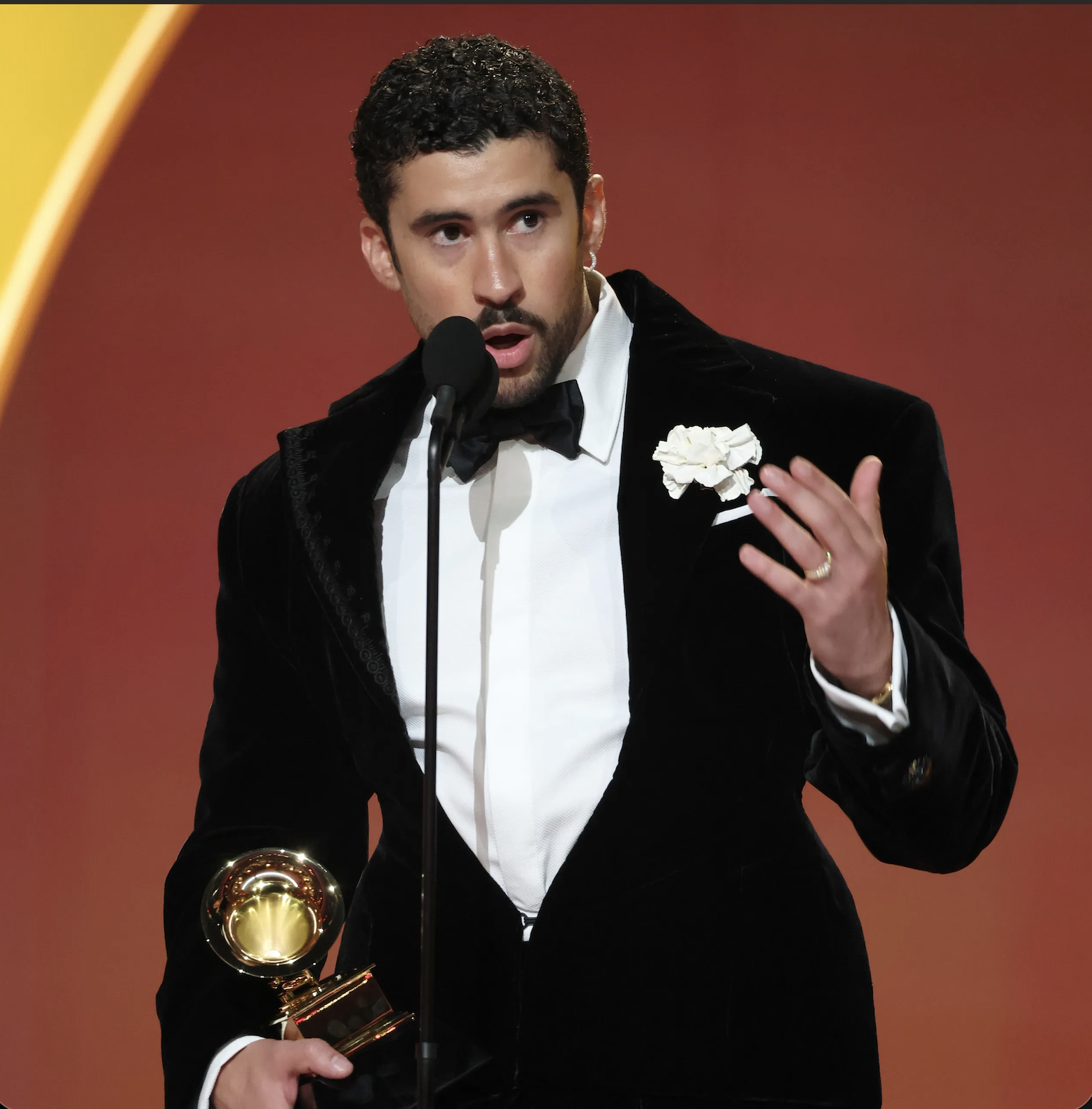
Bad Bunny, an American citizen himself, also decided to display on the Jumbotron, “The only thing that is more powerful than hate is love,” as a callback to his Grammy acceptance speech the week prior, referencing immigration enforcement actions he has publicly criticized in past speeches. He emphasized “ICE OUT” in his speech, which received widespread audience support during his acceptance speech. Bad Bunny wanted to underscore that the only way we, as a society, can become whole again is to continue expressing love, not hate.
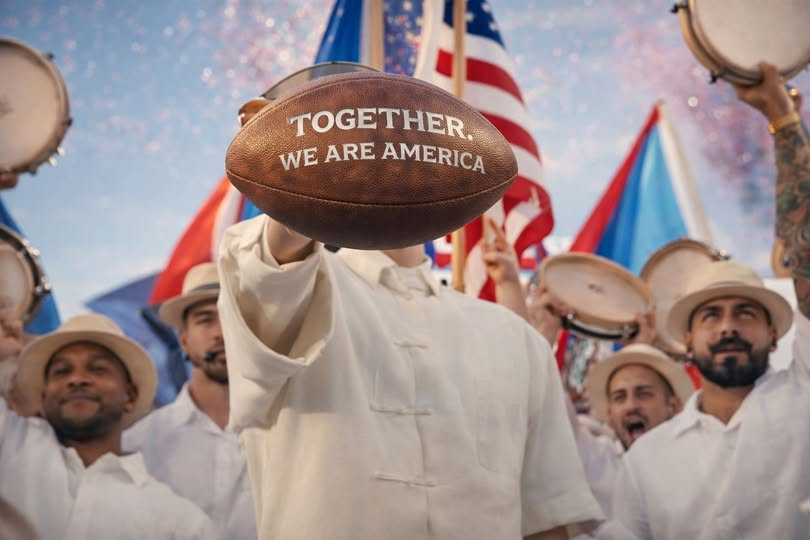
Bad Bunny continued to show hope by repeatedly displaying “We Are America” on the football he held throughout the show. Additionally, he repeatedly said “God bless America” throughout his performance to show his love towards America, while also addressing ongoing tensions between government immigration policies and Latino cultural expression. To conclude the performance, he summoned flags representing North, Central, and South America to join him in running off the field, illustrating the unity amongst society. Bad Bunny used one of the world’s largest stages to bring America together in one place to convey that, regardless of heritage, culture, or the language you speak, you are welcome in this country.
Media coverage has long influenced public perceptions of culture and national identity. In this case, certain media outlets and commentators have questioned whether Spanish-language music fits traditional ideas of American entertainment. The performance raises a broader question for the NFL moving forward: What does an American halftime show look like now?