
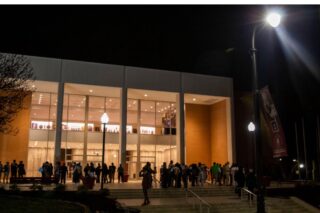
LOS ANGELES – The lights dropped and the music echoed through the arena, but for long stretches Saturday night, the electricity didn’t fully follow.
The 2026 Kia Slam Dunk Contest, broadcast nationally on NBC and Peacock, delivered isolated brilliance, celebrity cameos and one clear champion. It also delivered honest scoring, uneven execution and renewed questions about whether the event still carries the same edge that once defined All-Star Saturday.
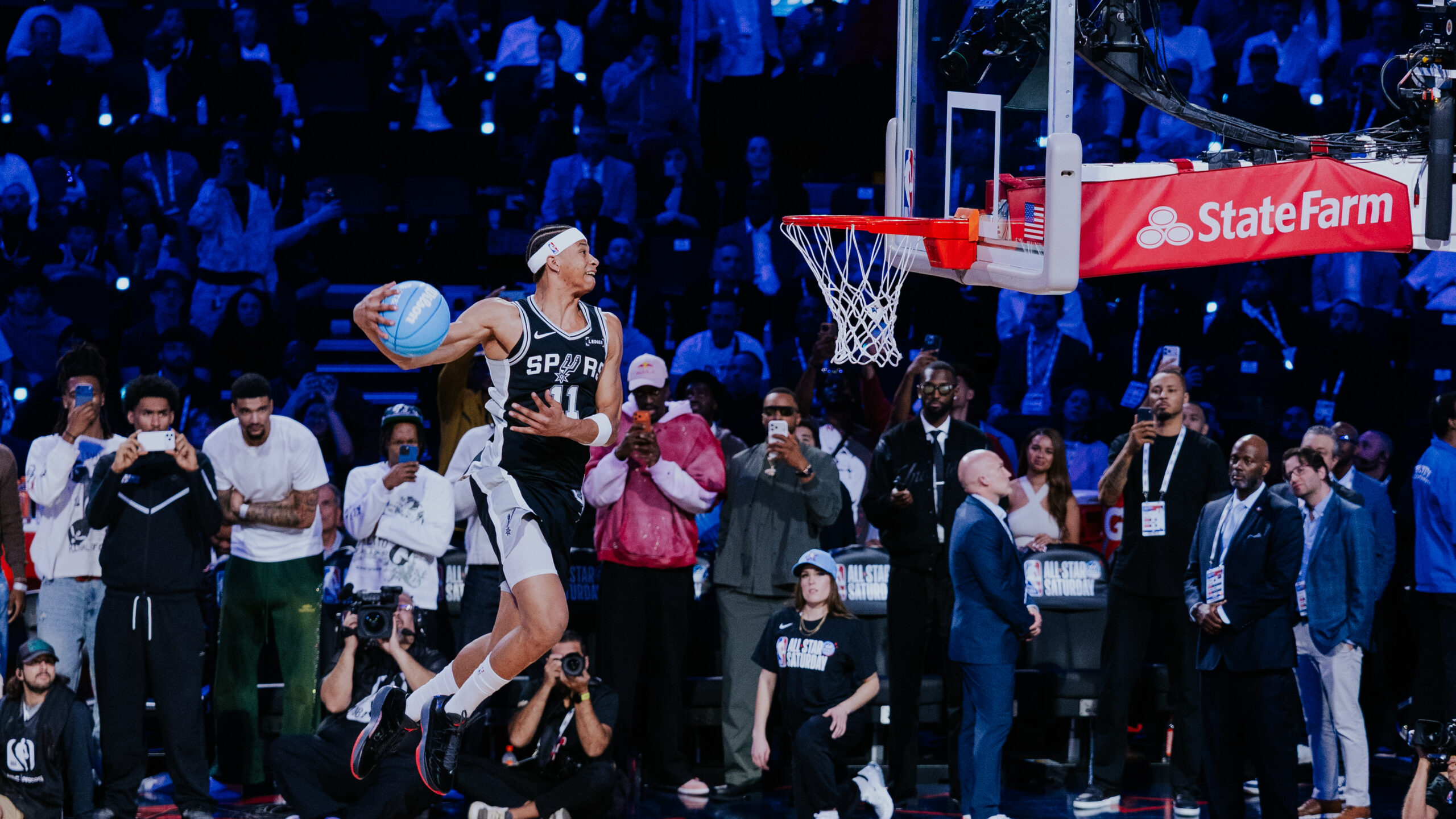
Four competitors entered: Carter Bryant of the San Antonio Spurs, Keshad Johnson of the Miami Heat, Jaxson Hayes of the Los Angeles Lakers and Jace Richardson of the Orlando Magic.
Bryant opened with a powerful, high-elevation slam that earned a 45.6, setting the tone for strict judging. Johnson followed alongside his partner, rapper E-40. After missing his first attempt over the hip-hop icon, Johnson regrouped and delivered a one-handed dunk cocked behind his head, earning a 47.4 and one of the loudest reactions of the afternoon.
Hayes opted for a smooth but basic finish in his first attempt, scoring 44.6. Richardson’s round proved dramatic. After two missed 360-degree attempts off the side of the backboard, he slipped on his third try and fell hard on his back. What could have been far worse ended with Richardson protecting himself and avoiding serious injury – a moment that brought relief rather than excitement.
Throughout the opening round, former Slam Dunk champions Dominique Wilkins, Dwight Howard, Nate Robinson, Brent Barry and a fifth chosen by fans handed out multiple 40-point scores for routine or incomplete attempts – and rightfully so. The numbers reflected performance, not popularity. At times, fans responded with scattered boos or noticeable silence. Outside of a few standout dunks, much of the contest lacked the sustained creativity and energy fans have come to expect from the league’s rising stars.
Bryant adjusted in the second round, finishing a strong one-handed slam that earned a 45.4 and advanced him to the final. Johnson then delivered the dunk of the night, soaring to earn a near-perfect 50-50-50-49. The moment drew visible reactions from stars around the arena and firmly shifted the contest in his favor.
Bryant struggled with timing in the final round and ultimately settled for a conservative finish that was not enough to surpass Johnson’s earlier masterpiece.
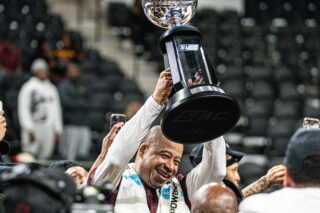
When the final scores were announced, Johnson stood alone. He lifted the glass trophy honoring the legacy of past dunk greats and credited his faith for his performance.
“The blessing that God gave me is abundant,” Johnson said. “It keeps growing beyond even my own comprehension.”
The contest featured flashes of brilliance, but beyond a handful of memorable moments, much of the night felt subpar compared with the expectations placed on the NBA’s young talent. If players are not fully committed to delivering their most creative and competitive efforts, the league may eventually face a difficult decision about the future of the event.
Brilliance still exists. Whether the dunk contest can consistently rise to meet its legacy remains the lingering question.
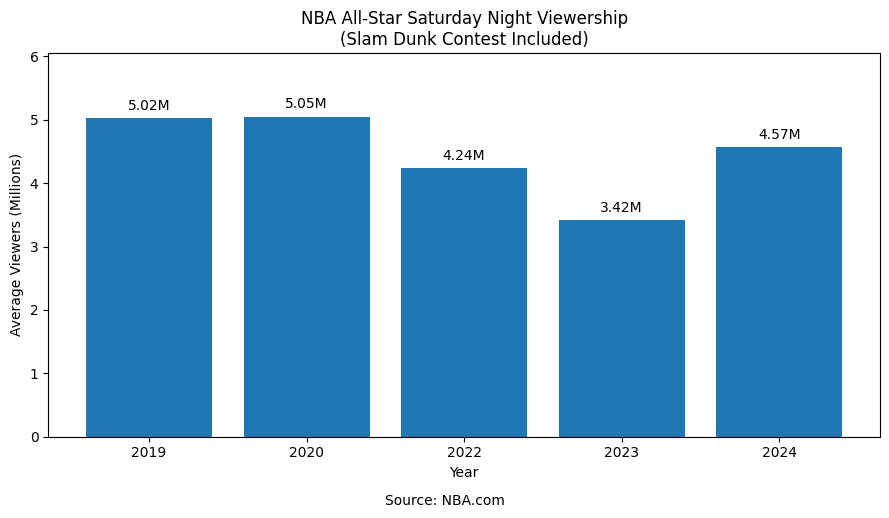
Viewership Context: Dunk Contest Highs and Lows
The data below highlights the contrast between peak interest during iconic dunk moments and the lower averages seen in recent All-Star Saturday Night broadcasts