



A conversation rooted in legacy
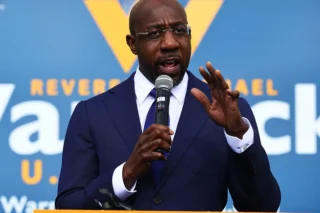
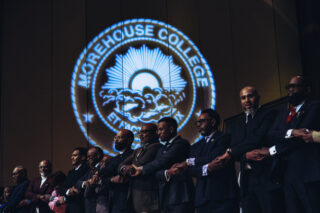
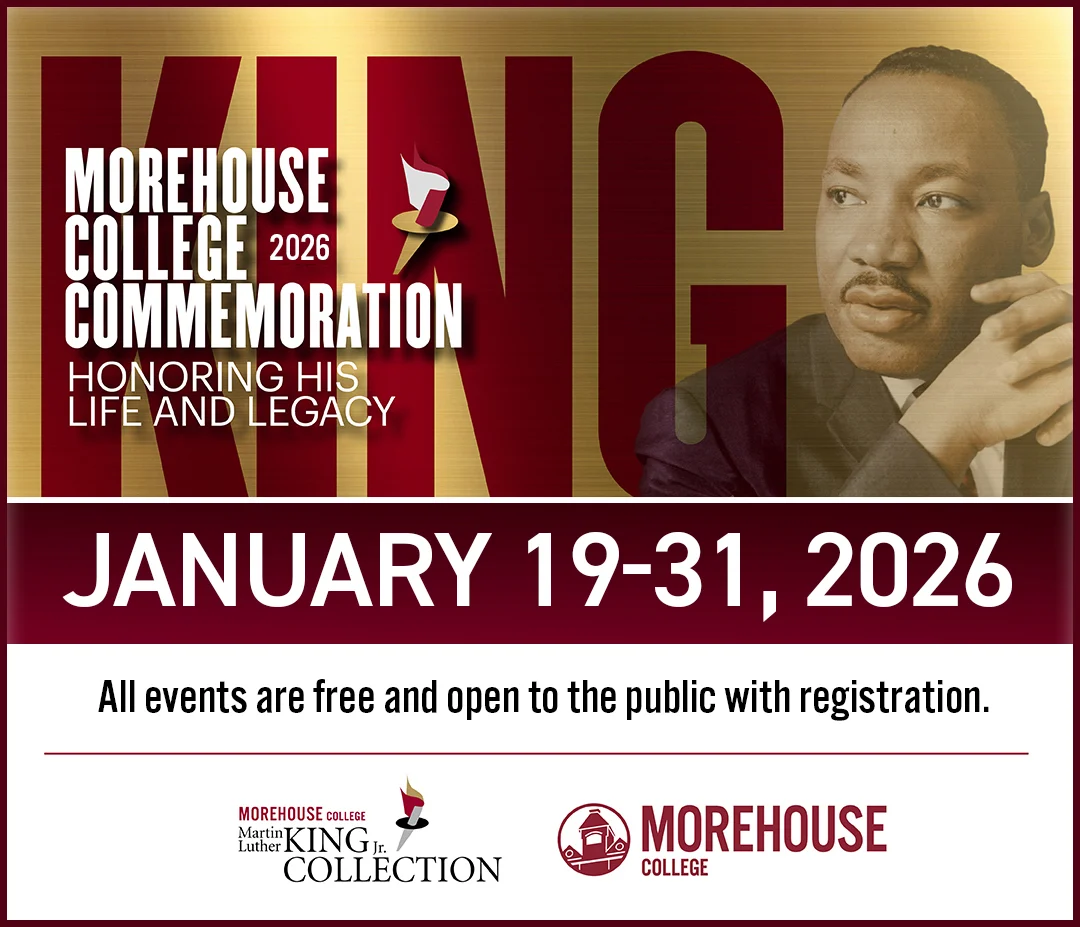
Morehouse College welcomed civil rights advocate and former Georgia State Representative Stacey Abrams alongside Montgomery Mayor Steven L. Reed ’96 for the Martin Luther King Jr. Collection Annual Lecture and Conversation Program on Tuesday, Jan. 27, 2026. The event took place at the Shirley A. Massey Executive Conference Center in the Bank of America Auditorium.
The event, titled “Protecting Democracy: A Public Conversation,” was hosted by Dr. David Wall Rice ’95. It focused on civic responsibility, leadership and the future of civil rights in the United States. Students, faculty and community members gathered to consider the role young people play in maintaining democratic institutions.
The Martin Luther King Jr. Collection preserves the papers and legacy of Dr. King. Through programs such as the annual lecture, it connects his philosophy of justice and nonviolence to contemporary social and political issues.
The conversation unfolded during a pivotal moment in national politics. Debates over voting access, election integrity and civil rights protections continue to shape how citizens participate in democracy.
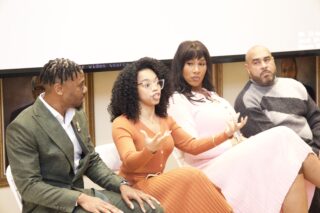
After the event, students said the discussion clarified their responsibility as members of the Atlanta University Center (AUC).
Chris Lambry Jr., a Morehouse College student from the Class of 2027, said the discussion showed how courage must lead to action. He pointed to the annual AUC March to the Polls. The march mobilizes about 250 to 300 students to vote at local polling sites after the removal of an on-campus voting location.
“Seeing hundreds of AUC students marching to vote shows our willingness to protect democracy through real action,” Lambry said.
Leaders share insight and call for sustained engagement
Abrams, a Spelman College alumna from the Class of 1995, addressed the erosion of voting protections and declining public trust.
“Our responsibility is to lift each other up and remind ourselves that we are entitled to more,” Abrams said. “We are the first generation since Reconstruction to have our civil rights taken away from us.”
She urged students to treat civic engagement as more than voting. Instead, she encouraged them to organize, educate and advocate within their communities.
John Cook, a Morehouse College student from the Class of 2029, said Abrams’ emphasis on strategy resonated with him.
“She reminded us that real change comes from strategic disruption, not just emotion,” Cook said. “As students, we break issues down and build solutions piece by piece.”
Reed then shared lessons from his experience governing Montgomery, Alabama, a city central to the civil rights movement. As a Morehouse alumnus, he encouraged students to lead with integrity and purpose. He also emphasized the influence they hold beyond campus.
Students reflect on responsibility
Many attendees said the speakers reinforced the unique role AUC students play in shaping social change.
A’Nija Hughley, a Spelman College student from the Class of 2028, said that responsibility extends beyond the classroom.
“Being at prestigious institutions gives us an education and awareness that not everyone has access to,” Hughley said. “We have to use that to speak up and protect the civil rights legacy of our alumni. That is why I plan to keep organizing in support of civil rights protections.”
Akina Ma’at, also a Spelman student from the Class of 2028, said the conversation challenged students to act with urgency.
“Our youth is not an excuse for inactivity,” Ma’at said. “We have a role in shaping the future we want to see, and that role is urgent right now.”
A call to action
Throughout the discussion, both speakers emphasized accountability, participation and collective action as essential to preserving democracy. The program also tied Dr. King’s legacy to present-day challenges. In doing so, it reinforced Morehouse’s commitment to producing leaders grounded in justice and service.
As students exited the auditorium, one message stood out. Protecting democracy is not a distant responsibility for future generations. It is a present duty that begins with informed, engaged citizenship.