





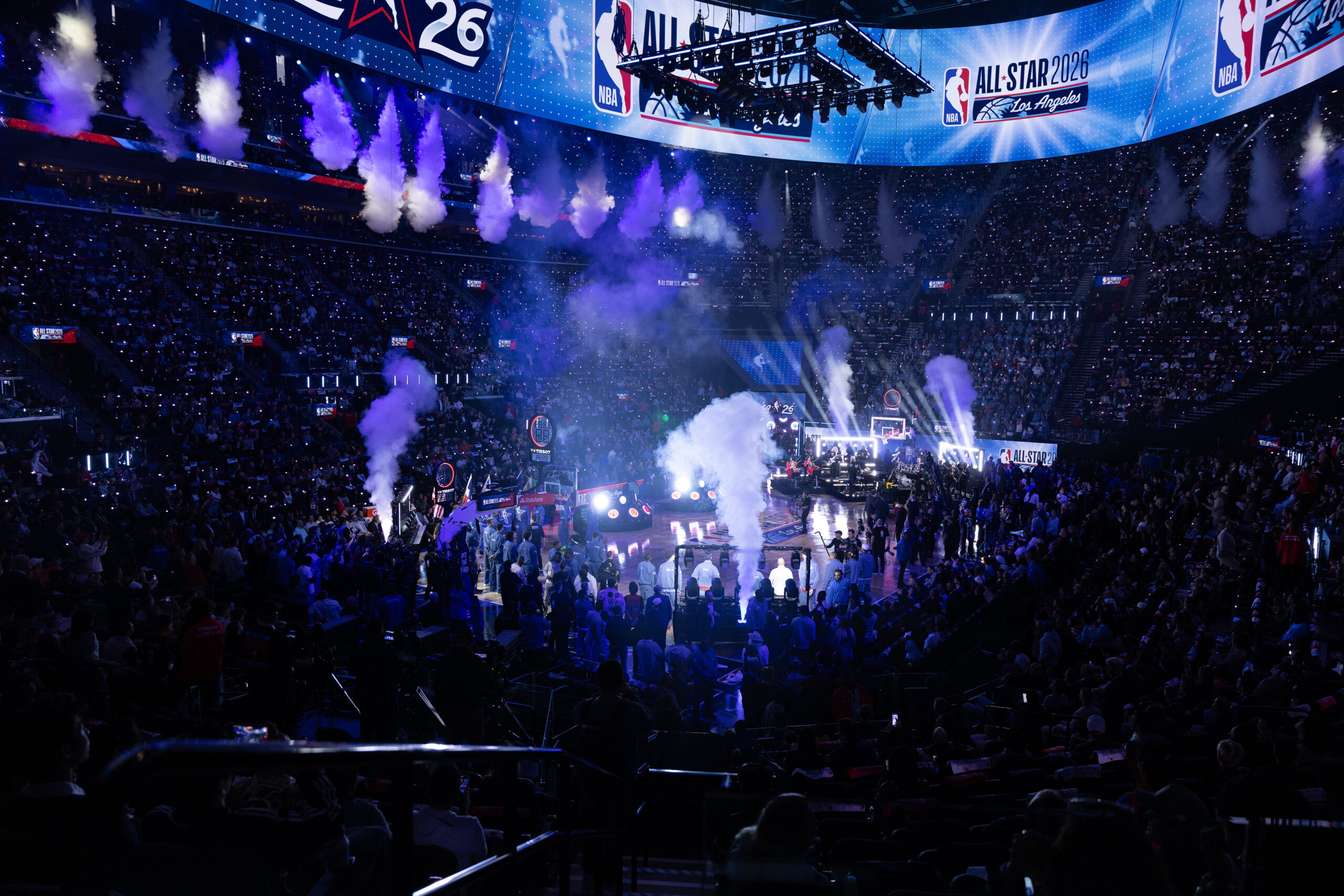
There were questions everyone had been asking: Playing under a new USA vs. World format, will this year’s All-Star Game be competitive for the first time in years? Will it at all be played with the energy and seriousness of a game that counts in the standings? Based on how they performed Friday, the NBA’s star players responded with a clear-cut “Yes.” They did not disappoint.
The Format
The NBA divided the All-Stars into three teams — two comprised of U.S. players and one made up of international talent. The younger American team, Team Stars, played first in a 12-minute contest against Team World, the league’s best international talent. The winner faced the veteran American squad, Team Stripes. Next, Team World faced off against Team Stripes.
Those three games determined which teams would compete in the decisive fourth game. A 2-0 or 2-1 team reached the championship. An 0-2 team will be eliminated. However, if all three teams ended up 1-1, the point differential determined who advanced.
The Results
Game 1:
The pregame intros were the only thing that stopped Victor Wembenyama from putting on a show. He accounted for 14 of Team World’s 35 points, along with six rebounds and three blocked shots.
“He got it going from the jump, and that set the tone for all of us,” said Atlanta native and three-time All-Star Anthony Edwards.
Edwards matched the energy with 13 points, nine of those coming from beyond the arc. Despite Wembenyama’s dominant performance, Team World came up short as Scottie Barnes made the 27-foot 3-pointer to give Team Stars the victory 37-35.
Game 2:
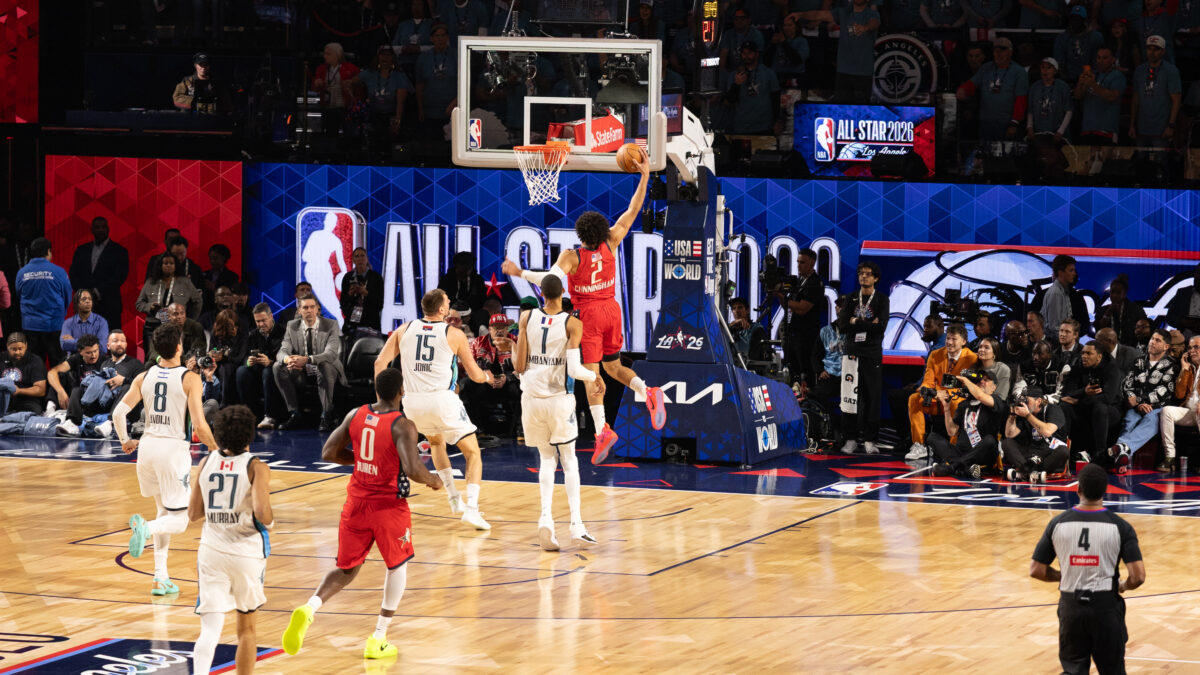
In the battle between the OGs and the young guys of Team USA, it was De’Aaron Fox who used his quickness to beat the buzzer with a swift 3-pointer over Cade Cunningham and Team Stars to take the lead with 1.2 seconds remaining, 42-40.
This game kept fans on their toes the whole time with six lead changes and contributions made from each player on both sides. Team Stripes had it going from deep as 24 of their points came from behind the 3-point line. However, Jaylen Brown was the standout by far. Brown got to his spots around the rim, adding 11 points to Team Stripes’ total score.
Game 3:
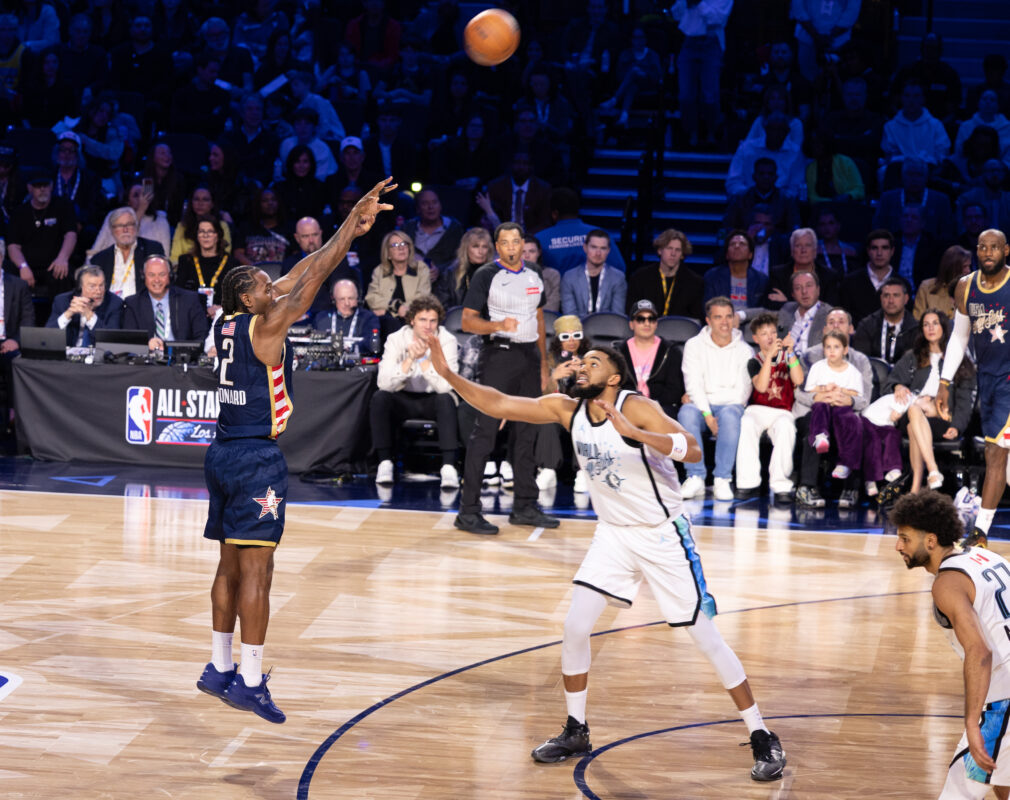
In the much-anticipated Team Stripes vs. Team World game, Los Angeles Clippers forward Kawhi Leonard proved why Intuit Dome belongs to him. Leonard had it going on his homecourt, whether it was his signature mid-range pull up, a layup or a step-back 3-pointer.
“The Klaw” found the rare air of what we call flow state, scoring 15 straight at one point and 31 of Team Stripes’ 48 points, shooting 11-for-13 (84%) from the floor. Wembenyama once again rose to the occasion as the only player on his team to put up double-digit scoring with 19 points in just ten minutes.
“It was great, I’m happy that Adam (Silver) let me in, and that’s what the home crowd wanted to see,” Leonard said after his team’s 48-45 victory. Commissioner Adam Silver added him to Team after he had been left off the All-Stars roster despite averaging career highs of 27.9 points and 2.1 steals per game.
Game 4:
The championship game was a rematch between Team Stripes and Team Stars. The victorious Team Stars were led by Tyrese Maxey, Chet Holmgren and Edwards. The trio combined for over half of their team’s 47 points. Fifteen of those came from fast-break opportunities. Afterwards, Edwards said it felt good to finish the competition by avenging their earlier loss to Team Stripes.
“I was talking to Cade (Cunningham) before we walked out and he said we got to get our lick back. So we went out there and stomped on them.”
The MVP
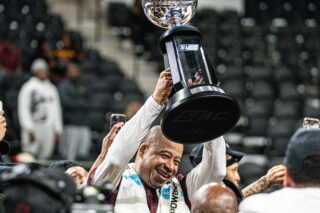
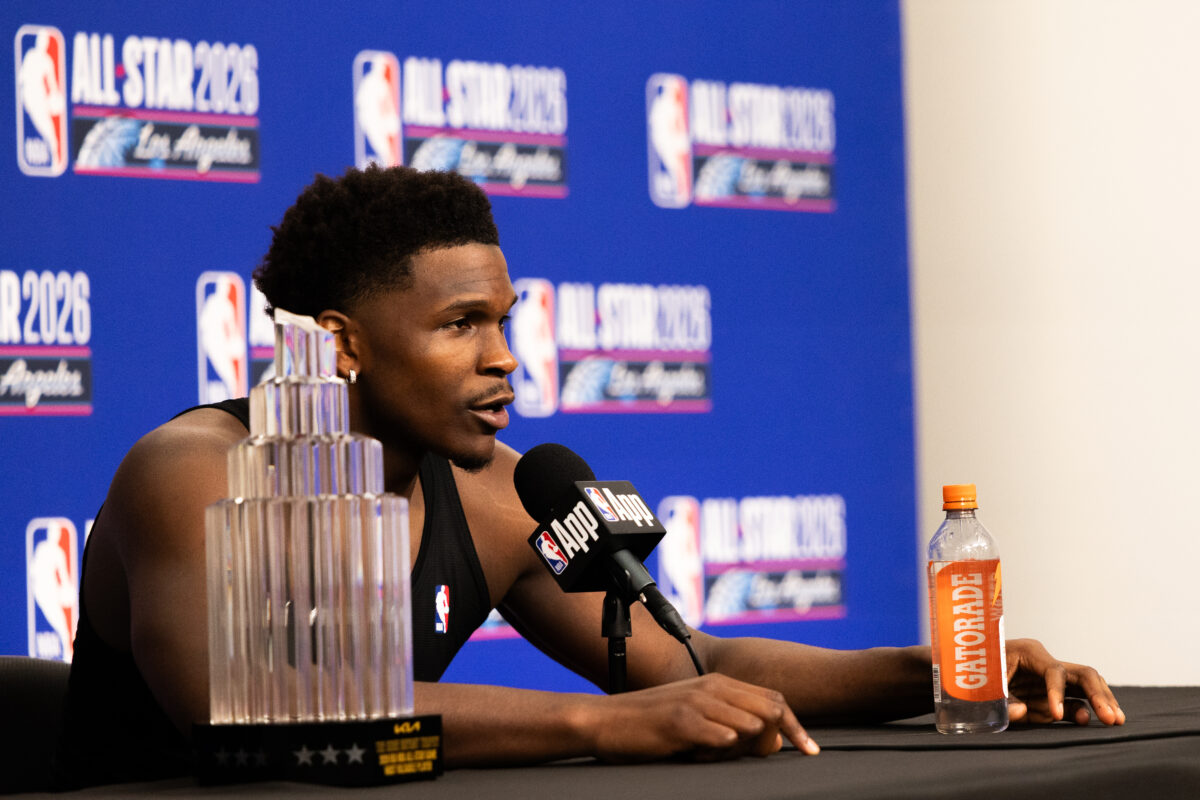
Although Leonard had a spectacular performance, Edwards took home the Kobe Bryant MVP trophy in the 75th annual All-Star Game. Edwards totaled 32 points on 13-for-22 shooting throughout the night. His array of swift moves to the rim and a seemingly automatic mid-range jumpshot helped him secure the trophy.