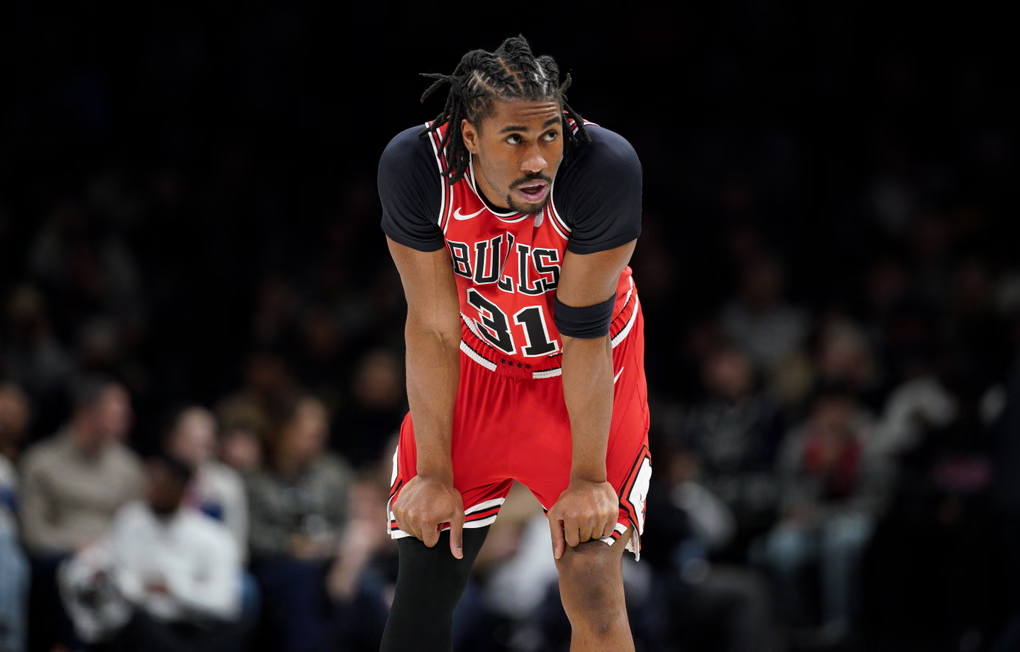


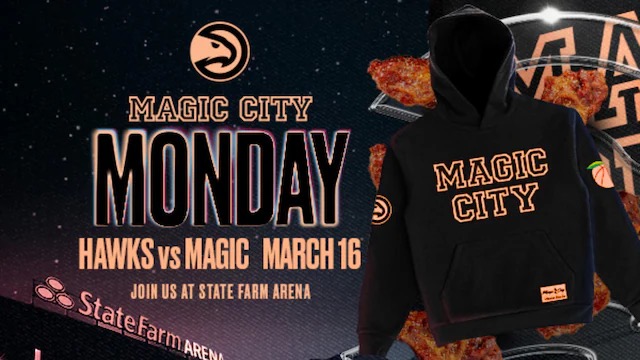
On Feb. 26, 2026, the Atlanta Hawks announced that Mar. 16, 2026 was Magic City Monday, a promotional event where the Hawks were set to partner with Magic City, the famed Atlanta strip club whose influence stretches across the country, to match their game against the Orlando Magic.
Then on Mar. 9 the event was abruptly canceled on the Atlanta Hawks Instagram.
Atlanta rapper T.I. performed during the halftime show. Although, DJ Esco, who rose to fame in part through his partnership with Future on “56 Nights,” was set to serve as the DJ controlling the in-game music. There was to be a special recording of the “Hawks AF” podcast, hosted by D.C. Young Fly, T.I., and Michael “Mr. Magic” Barney, Sr., the founder and owner of Magic City. The club originally planned to sell two versions of its famed lemon pepper wings along with a limited edition Peachtree hoodie at State Farm Arena during game time.
The event drew the ire of fans, players and the league itself.
“We have heard significant concerns from a broad array of league stakeholders… I believe canceling this promotion is the right decision for the broader NBA community,” said NBA commissioner Adam Silver.
The cancellation of this event poses the question: was cancelling Magic City Monday the right decision from the league? The Hawks’ position is that Magic City is more than just a strip club; it’s an iconic cultural institution.
Historical significance of Magic City
Magic City is, at its base, a strip club. However, it weaves itself into the fabric of Atlanta. The city and the culture that make Atlanta may never have been what it is today if not for Magic City opening all the way back in 1985.
In order to explain, let’s start with the story of Michael Barney, Sr., otherwise known as “Mr. Magic.” Barney was born into a family of seven in Camden, New Jersey, and moved to Atlanta in 1979. Here, he worked as a telephone salesman, earning commission. Just like Atlanta, he carried an entrepreneurial spirit, leading to the opening of Magic City.
Within four years, the club became a hub for key players in Black culture, starting with Atlanta Hawks superstar Dominique Wilkins. More celebrities started to follow, including players on other teams like Michael Jordan. Through the years, Magic City also saw guests like T.I., Jermaine Dupri, Tupac, Big Meech and the Black Mafia Family, and more.
Cultural impact
When celebrities come into a space, money follows. The Black Mafia Family often spent more than $15,000 nightly at the club. That money went to the dancers. These women were not just dancing for money. They were dancing for opportunity. That money put these women through college, allowed them to open restaurants and businesses, and jumpstarted the lives they dreamed of.
In the documentary “Magic City: An American Fantasy,” it’s said that Magic City “is a space where women can be a part of the hustle community” of Atlanta.
Careers were started in Magic City. Big Meech backed Jeezy and helped him become famous. His rise, as well as that of T.I., helped lead to the popularity of trap music, which details the lives of poor people who have to find ways to make money and elevate themselves from their condition. Future got his big break because the dancers enjoyed performing to his song, “Tony Montana.” Outkast’s “Bombs Over Baghdad” was made to appeal to the dancers and the patrons of the club.
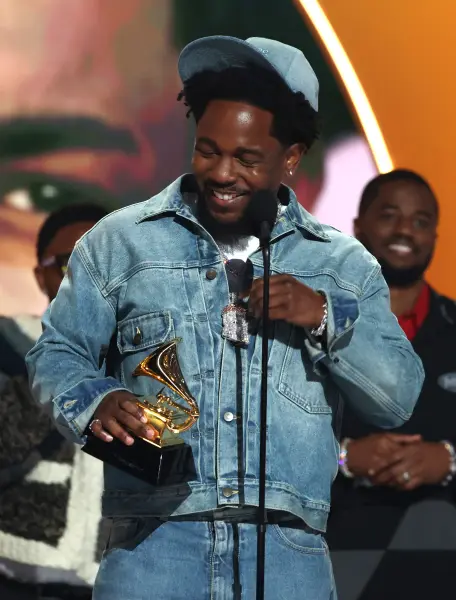
Grammy award-winning producer Jermaine Dupri posits that “the strip club brought awareness to the artists.”
Atlanta rapper and activist, Killer Mike says that “If you don’t have these clubs, you’d never have the soil to grow the music industry that creates an Outkast.”
Public Backlash
Obviously, the promotion faced criticism as well. San Antonio Spurs center Luke Kornet wrote in a blog post about how letting Magic City Monday happen would reflect badly upon the NBA, making it look complicit in the objectification of women. The post, dated March 2, calls for the Hawks to cancel the promotion.
“The NBA should desire to protect and esteem women, many of whom work diligently every day to make this the best basketball league in the world,” Kornet said in his post. “We should promote an atmosphere that is protective and respectful of the daughters, wives, sisters, mothers, and partners that we know and love.”
Luke Kornet makes good points. Despite the money, the conditions that come with performing at a strip club are not always ideal for the ladies who dance. The NBA tries to appeal to all groups of people, and highlighting a strip club doesn’t look good.
However, Magic City is more than a strip club. It is a staple of the Atlanta community, and has been for decades. People have had lives because of Magic City. Black culture exists in part because of Magic City. From where I see it, the NBA was wrong for cancelling this celebration of an iconic cultural institution.