




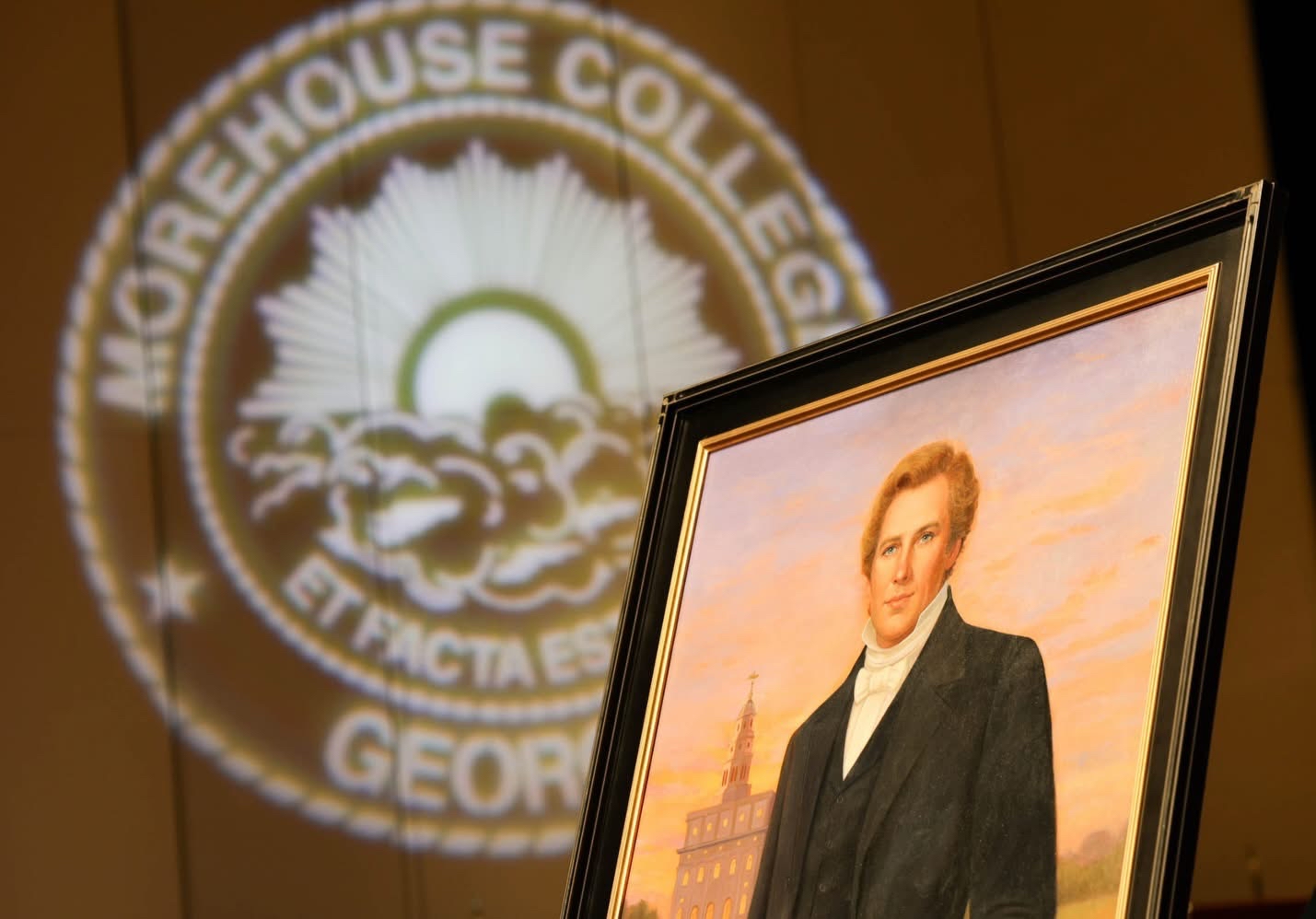
The Martin Luther King Jr. International Chapel sparked campus outrage after it unveiled a portrait of Joseph Smith Jr., founder of Mormonism, in its Hall of Honor. Students say chapel administrators made the decision without meaningful student input and ignored how the honor conflicts with Morehouse College’s legacy.
The chapel unveiled the portrait Sunday, Feb. 1, during its 5:30 p.m. vespers service. Two days later, chapel assistants began drafting a formal letter of dissent. Over the following week, tensions escalated between students and chapel leadership over representation, governance and the symbolism of the Hall of Honor.
So, who was Joseph Smith Jr.?
Joseph Smith Jr. founded the Church of Jesus Christ of Latter-day Saints in the early 19th century. Many students and scholars consider his views on race and slavery deeply troubling.
Although Smith later expressed support for gradual emancipation, historical records show that he tolerated slavery among church members and made racially charged statements throughout his life.
Zandra Vranes, a Black Atlanta resident and lifelong member of the Church of Jesus Christ of Latter-day Saints, said Smith’s record reflects both regressive and progressive ideas for his time.
Historical texts document Smith making racist remarks, including a journal entry that states, “Had I anything to do with the negro, I would confine them by strict Laws to their own species.”
In a letter to fellow religious leader Oliver Cowdery, Smith warned against freeing enslaved people. He argued that abolitionists might “set loose upon the world a community of people who might peradventure, overrun our country and violate the most sacred principles of human society, chastity and virtue.”
Smith later supported gradual emancipation during his 1844 presidential campaign. However, Vranes emphasized that he never prohibited church members from enslaving people.
“Is a person allowed to evolve? Sure,” Vranes said. “But even while he was running on that anti-slavery platform, there was never a time where he didn’t allow members to have enslaved people.”
Vranes said she questioned why the chapel chose to induct Smith into the Hall of Honor.
Dean Carter’s justification
Dean Lawrence Edward Carter, dean of the Martin Luther King Jr. International Chapel, has publicly praised Smith. In a published article, Carter referred to Smith as “Lincoln before Lincoln.”
Vranes challenged that comparison. She said Abraham Lincoln and Smith’s political opponent James G. Birney openly opposed slavery, while Smith promoted gradual emancipation paired with compensation for slave owners.
In an exclusive interview with The Maroon Tiger, Carter defended the decision. He described Smith’s abolition stance as courageous and historically significant.
“Smith wanted to free the enslaved Africans, and he wanted to have the federal government pay reparations to slave owners,” Carter said. “If elected, there would have been no civil war.”
Carter also cited financial constraints as a factor in the decision.
“Donors are hard to find who are willing to pay for oil portraits of people they don’t know,” Carter said. “I haven’t been able to find money for almost everybody you can name in Black history.”
Student dissent and alleged retaliation
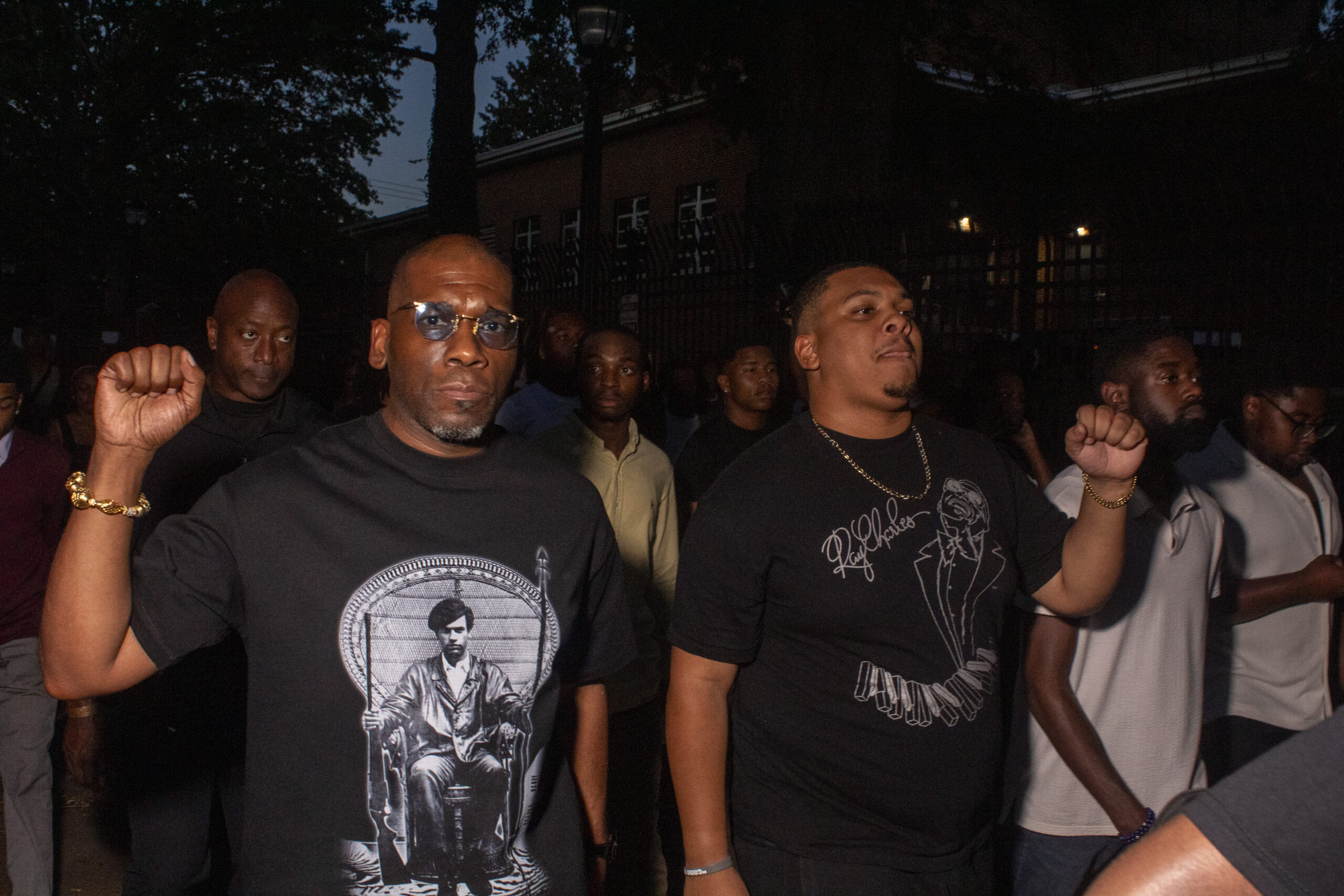
On Wednesday, Feb. 4, junior Alonzo Brinson, the 40th President of the Chapel Assistants, and junior Damarion King, vice president of the Chapel Assistants, released a letter condemning the decision to honor Smith. The letter questioned whether the induction aligned with Morehouse’s mission and institutional values. Students involved say chapel administrators dismissed their concerns and, in some cases, responded with disciplinary actions.
On Feb. 5, King advanced to the finals of the Otis Moss Oratorical Contest. During his speech, King publicly criticized the college’s decision.
“How are we falling asleep while a racist, unethical, miseducated, dead white man is honored with a portrait in this sacred space,” King said. “While hardworking Black, powerful and educated men and women are overlooked? Morehouse, how are we falling asleep?”
Later that week, contest officials disqualified King, citing changes between his semifinal and final speeches. Administrators also informed him that he would no longer host or speak at the Candle in the Dark Gala scheduled for Saturday, Feb. 14, 2026.
“Your decision to do the Instagram post, as well as what you said during the oratorical contest has become a negative for having you stand before people at the gala,” said Leah Creque, an administrator overseeing the gala and contest, during a phone call with King.
When The Maroon Tiger asked Creque about disciplinary action against King, she said, “To my knowledge, no official action has been taken towards Mr. King.”
King said the statements conflicted with what Creque told him directly, which he said left him confused about his standing with the college.
Disparities during the unveiling
During the Feb. 1 service, the chapel unveiled portraits of both Joseph Smith Jr. and Dr. Harold Bennett, chair of the Philosophy and Religion Department at Morehouse College.
Students pointed to a stark difference in how long both Bennett and Smith were honored. Chapel assistants estimate that the address introducing Smith lasted approximately 15 minutes, while Bennett’s introduction lasted about four.
Brinson said the disparity disrespected both Bennett and the institution.
“When I wrote the letter, it was not out of frustration but out of standing for something,” Brinson said. “Because if you don’t stand for something, you will fall for anything. We have prostituted ourselves, in a manner of speaking, for the Mormons. I was very disappointed by Dean Carter for doing that.”
Brinson and King said the decision diminished the work of collegiate ministry and disregarded the legacy of Morehouse College.
Student representation and governance concerns
Students say the controversy reflects a broader pattern of exclusion within the chapel, especially around decision-making authority.
“We set up, take down, usher, escort, pick up from the airport and pick up from hotels,” Brinson said. “We do the grunt work, but we have no say in the process.”
Brinson and King said chapel assistants began recording conversations with Carter to ensure accountability. Associate Dean Quincy James Rineheart said he did not know about the recordings and questioned whether Carter consented.
King said he always informs Carter when he records conversations but acknowledged that he does not speak for all assistants. Rineheart said in an email that he did not commission Smith’s portrait.
Campus response and what the Hall of Honor represents
Students outside the chapel assistants have also criticized the decision. Linden Young, a senior philosophy major from Columbus, Ohio, said honoring Smith contradicts Morehouse’s mission.
“By honoring Joseph Smith, a man who believed the enslavement of Black people was ordained by God, we have to understand how inconsistent that is with the mission of freedom fighting,” Young said.
As debate continues, Carter has urged forgiveness and deeper scholarship.
“Why do you go to church if you don’t want people saved, redeemed?” Carter said.
Students argue that the controversy extends beyond one historical figure. They say the Hall of Honor sends a message about whose legacies the chapel elevates and who holds power in one of the most sacred spaces on campus.
Brinson and King continue to call for transparency, meaningful student involvement in chapel governance and a reevaluation of how leaders select honorees.
At the center of the debate stands not only a portrait on the wall, but a broader question about power, representation and whose values the Martin Luther King Jr. International Chapel ultimately reflects.