




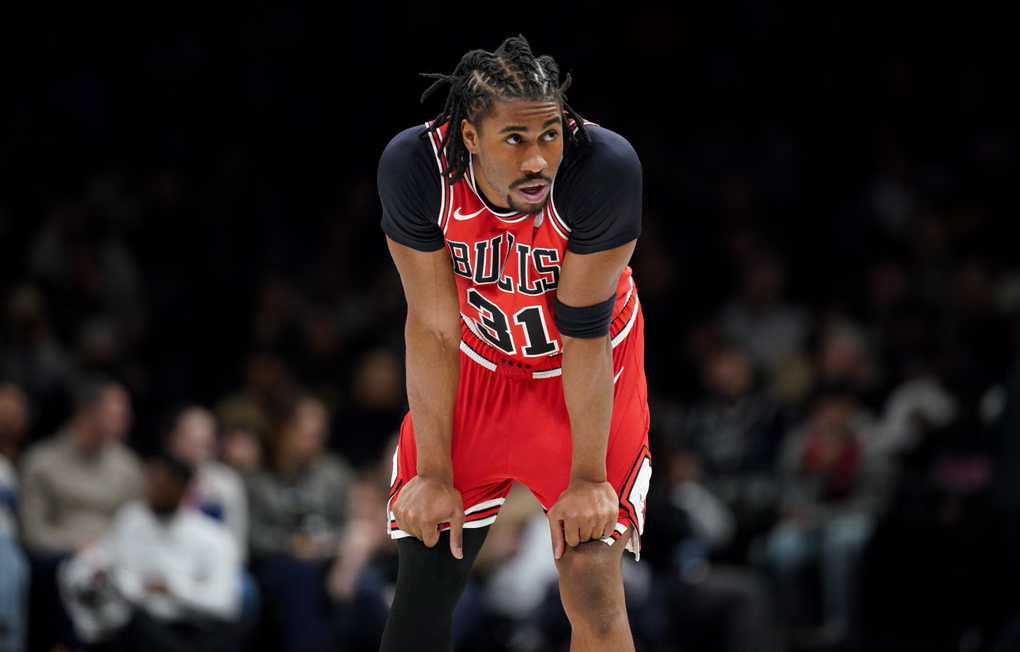
The intersection of professional sports, personal faith and public accountability has once again become a flashpoint for debate. Following a series of social media broadcasts that many have labeled homophobic and exclusionary, the Chicago Bulls officially waived guard Jaden Ivey on March 30. The move comes as the league grapples with where the line is drawn between a player’s private religious conviction and their public obligation to a diverse workforce.
The Rants and the “Rebirth”
Ivey, a former standout at Purdue and the fifth overall pick in the 2022 NBA Draft, used Instagram Live to deliver a series of impassioned “sermons” that quickly veered into a critique of the LGBTQ+ community. Citing a recent “rebirth” in his faith, Ivey characterized the NBA’s inclusive initiatives that specifically surrounded Pride Month as a celebration of “unrighteousness.”
“They proclaim their unrighteousness on the billboards and in the streets,” Ivey stated during a live stream. “Why can’t I speak righteousness?”
Freedom of Speech vs. Freedom from Consequence
The fallout was swift, reigniting a fundamental American debate: the distinction between the right to free speech and the myth of “freedom from consequence.” While the First Amendment is a cornerstone of American democracy, it is frequently misunderstood in the context of the private sector. The Constitution protects citizens from government interference and state-sanctioned silencing; it does not grant an employee immunity from the code of conduct established by their employer.
In professional sports, a player’s contract is a binding agreement that often includes “morality clauses” or “conduct detrimental to the team” provisions. When Ivey broadcasts views that alienate a portion of the fanbase or create a hostile work environment for teammates and staff, he is not being “censored” by the state; he is being held accountable by his organization. The Chicago Bulls are under no legal or ethical obligation to subsidize a platform used to disparage the very community the NBA seeks to include.
Two Decades of Corporate Progressivism
The situation also highlights a broader shift in the American corporate landscape. For nearly two decades, major companies have undergone a seismic shift toward “Corporate Social Justice.” Since the early 2000s, global brands have moved beyond mere profit-seeking to embrace progressive values aand viewing diversity, equity and inclusion (DEI) as core business strategies.
The NBA, in particular, has spent 20 years cultivating a brand synonymous with inclusion. In this environment, a player’s public rejection of those values is viewed as a direct threat to the league’s global business model and its commitment to a safe, inclusive workplace, not just as a difference of opinion.
A Career at a Crossroads
The timing of the release is particularly notable. Ivey had only joined the Bulls in February following a trade from the Detroit Pistons. Already sidelined with a knee injury, his tenure in Chicago lasted less than two months, ending not because of his performance on the court, but because of his rhetoric off it. As Ivey enters free agency, the sports world is left to ponder: what happens when a player’s personal platform collides with twenty years of corporate progress?