

For the first time, I attended this year’s National Association of Black Journalists (NABJ) Convention in Atlanta, and it felt like a family reunion: Black journalists celebrating one another, sharpening their skills and uplifting the next generation.
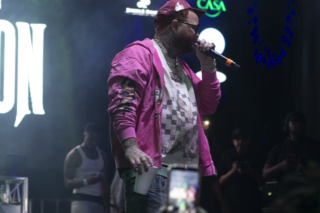
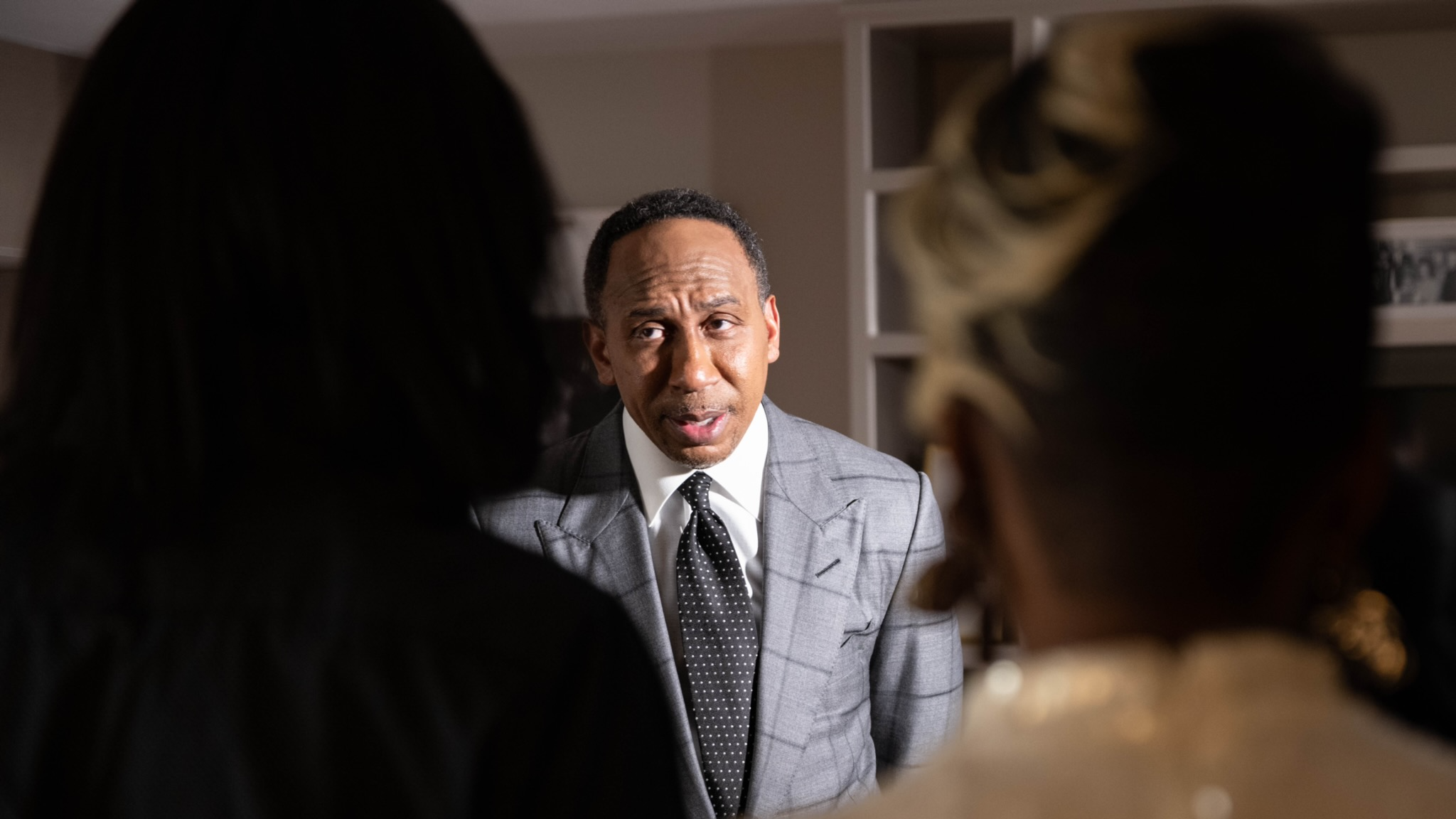
But after witnessing Stephen A. Smith receive the Thumbs Down Award at the Salute to Excellence Gala on Aug. 15, I’ve felt blindsided.
NABJ committed a journalism foul when it announced Smith was a recipient of the award. They justified this dig at Smith by referencing a recurring pattern of “disparaging commentary toward prominent Black women across politics, sports and media.”
He received no warning about being a possible recipient of the award prior to the conference. The gesture from NABJ carried an undertone of controversy at an event where attendees expect transparency and honest reporting.
NABJ standing on their principles
Before Smith responded, NABJ president Errin Haines defended the decision, stating, “If NABJ is going to be serious about defending Black journalists and defending journalism itself, then sometimes we have to say their names. And so tonight, we did.”
Although protection must be provided to Black journalists, her treatment of Smith leaves him out of the equation.
Less than 48 hours following Haines’ statement, Smith responded to those claims on his Straight Shooter YouTube channel. Addressing Haines and NABJ directly, Smith asserted, “Where are your facts? You don’t have facts; you have feelings… everything that has uplifted me in my life has been associated with Black women.”
His aggressive reaction reflected the vulnerability of Black journalists, whose commentary on sports and politics can make industry jabs feel like knockout blows.
Free speech, but at what cost?
The reasoning behind Smith’s Thumbs Down Award also sparked a conversation about how much freedom of speech Black journalists have.
Smith has only recently broadened his subject matter to discuss the U.S. political climate on his YouTube channel. During his 44-minute rebuttal on Aug. 17, he described himself as an independent who leans fiscally right but socially liberal.
While Smith conceded that some critiques of Black female politicians were unconstructive, I believe the industry’s harsh criticism stemmed from his politics and race.
It seems as though the award labeled Smith as the stereotype of the racist Black conservative, an image-destroying title. Even if Smith does not “speak glowingly enough about the Democratic Party,” NABJ should not create another barrier for a Black journalist.
Jasmine Crockett controversy
Take Smith’s critique of Rep. Jasmine Crockett in Oct. 2025, for example. Smith condemned Rep. Crockett for her rhetoric towards President Donald Trump, boiling her inflammatory language towards the president down to what Smith referenced as “street verbiage.” Rep. Crockett eventually responded to his criticism, saying, “When I first heard the comments, I was disappointed. Simply because it was a Black man.”
In Aug. 2025, Rep. Crockett spoke at a rally in Phoenix where she called President Trump a “piece of s***” to accentuate her argument that House and Senate Republicans were “complicit” in providing sufficient checks under his power. “In a functioning democracy,” Crockett said, “he still would not be able to get away with this.”
In Jan. 2026, Smith rebutted on ABC News, saying, “Is cursing the president out and calling him a piece of s*** on national television or in front of a national audience going to help your constituency?”
While Smith was not gentle with his words, he showed no intent of defaming or bringing down Rep. Crockett, but a concern that her actions may come back to bite her, especially because she is a Black woman in a conservative state.
Smith acknowledged that he went out of bounds in the manner of his critiques of Crockett. Jemele Hill, a female Black journalist for The Atlantic, spoke on NewsNation after Smith received the award and supported NABJ by saying, “You have so many people on the right saying she is ghetto, don’t be the one piling on. You can’t be that dude.”
Smith publicly apologized for how he criticized Crockett. He needed to do that, especially because a prominent Black man in the media can easily reinforce stereotypes already used against Black women.
However, in the sphere of honest and transparent journalism, he had the right to reflect on his own experiences and to express his view of Crockett’s rhetoric.
A more nuanced legacy
Smith’s broader actions to uplift Black women tell a more nuanced story than accusations that he “disparages Black women” suggest. As executive producer and star of First Take, Smith has shared the spotlight with talented analysts, including Monica McNutt, Chiney Ogwumike, and Kimberly A. Martin, to maintain First Take’s top-tier status.
Black journalists have long fought for the freedom to speak their minds and to challenge uncomfortable ideas. So when one of their own does exactly that, why should they subject him to public scrutiny?
At a conference centered around celebrating Black excellence, publicly condemning one of the most prominent Black journalists of our generation felt like the exact opposite of the unity I had experienced throughout the week.