




Where are we now?
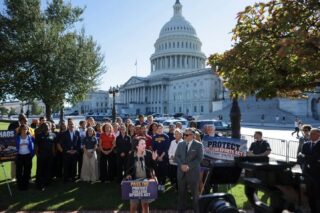
United States President Donald J. Trump’s 2nd year of his 2nd term is beginning to come to a close. So far, his presidency has seen an average inflation rate of 3.7 percent as of September 2026. His administration has also sparked controversy over the Epstein files, the conflict with Iran, high tariffs on imported goods and the expansion of Immigration and Customs Enforcement (ICE) operations. These developments have contributed to a growing culture of fear among noncitizens living in the United States.
If I continued listing the ways Trump’s presidency has negatively affected many people living in America, many of you would likely stop reading at this point.
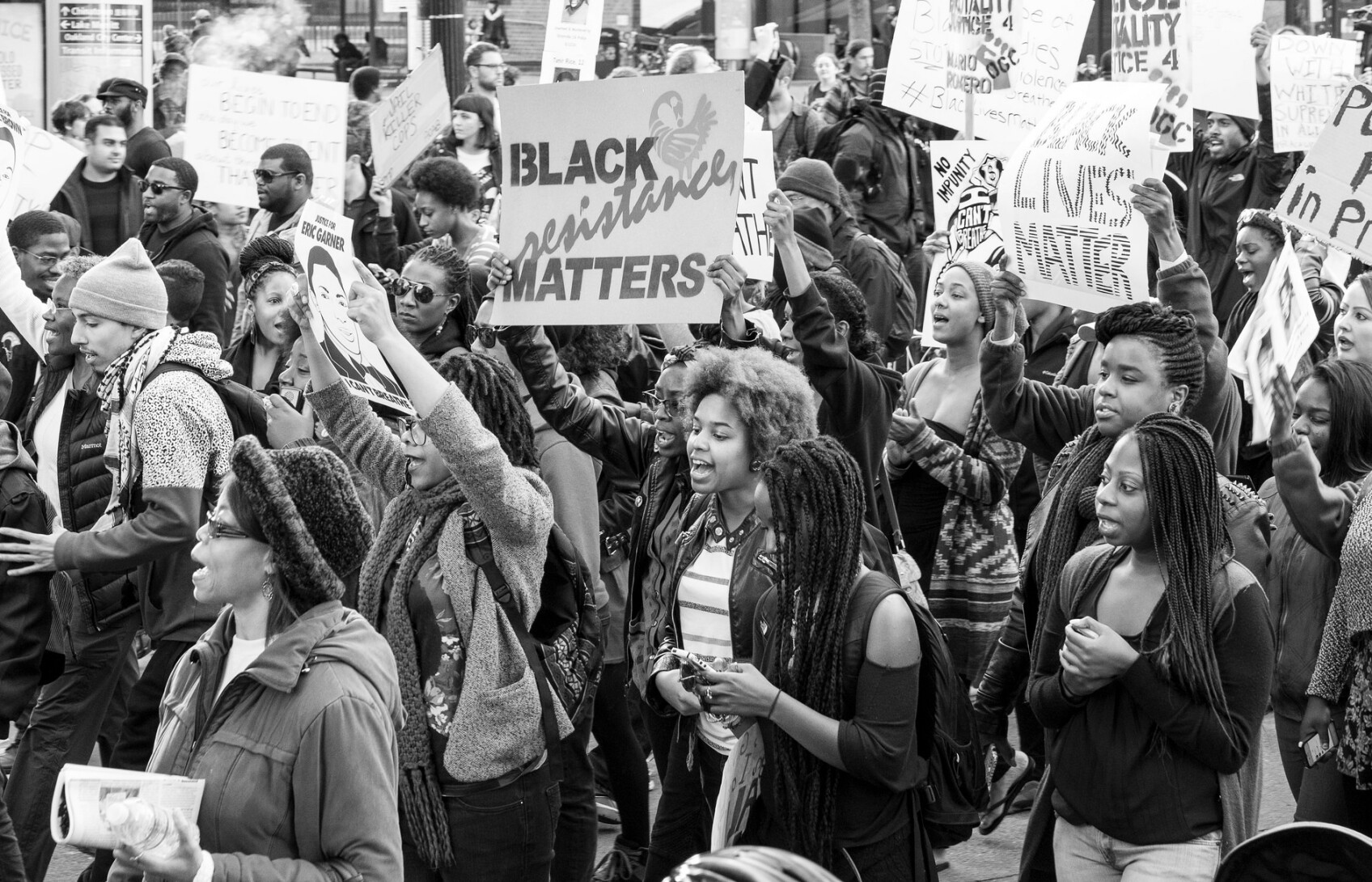
The “we” in “Where are we now?” signifies those who are caste into the margins of our society. People of color often face exclusion from traditional narratives about America’s founding. Many also struggle with housing insecurity and a capitalist system that continues to reinforce widespread economic inequality.
Necessary framing
In his critique of capitalism, Karl Marx theorized that capitalism resulted in two classes of people. The bourgeoisie are those who own the means of production. The proletariat are those whose labor serves as the means of production. Put simply, the proletariat sell their labor for wages, while the bourgeoisie control the means of production and profit from workers’ labor.
We are the oppressed proletariat that Marx was referring to. Accepting this distinction is paramount. As such, we cannot believe in the insidious notion that our individual goal should be to one day sit amongst the bourgeois.
Capitalism itself is already fundamentally unequal. If we take into account Trump’s presidency so far, remnants of pseudo-fascist regime are left behind. Journalists from CNN, MS Now, and Politico were banned from the white house by the President until a federal judge ordered them to be let back in. ICE has been allowed to wear masks, not show their badges to anyone, kill citizens without consequence, and worst of all throw people into a detention center without due process.
The final nail in the coffin is Trump’s continued military involvement in Iran. More than 230 days after the conflict began, Congress has yet to formally declare war. Furthermore, this conflict is not one by which America had to fight.
Israel, our “ally” across presidencies has been allowed to squeeze all the resources it can out of the United States in perpetuity. They’ve dragged us into this war in Iran. American tax dollars fund weapons Israel uses in Gaza, where it faces accusations of genocide against Palestinians. Many U.S. politicians receive support from AIPAC, a pro-Israel lobbying group. Critics argue that these politicians show more loyalty to Israel than to their own constituents.
The will to change
How much degradation, dehumanization and death must we endure before we recognize that creating lasting, positive change requires us to prioritize the collective over the individual?
Pulling from the work of Paolo Freire’s ‘Pedagogy of the Oppressed’ I echo his sentiments that we as oppressed people will not and cannot become satisfied with the false charity of the bourgeois class. The objective of those who oppress is, and has always been, to maintain their position at the top. Expecting them to provide the tools we need to free ourselves from their control leaves us dependent on their goodwill.
These demagogues have long demonstrated a lack of moral integrity. Today, their actions continue to reveal an absence of goodwill.
These people do not possess the capacity nor desire needed to allow us the opportunity to actualize our humanity.
Cultivation of our wills first requires honesty, an unwavering longing for the truth. Precision is an essential part of this pursuit. A degree of authorial distance is paramount when one seeks precision in the pursuit of truth. The stakes are too high for us to allow our individual desires to take prominence over our collective march toward justice.
Our collective struggle is one in which we must fight to reclaim our right to be dignified human beings and to be treated as such.
Challenges
‘Black Skin White Masks’ by Franz Fanon provides invaluable insight into what oppression can and often does do to the oppressed.
In his work, Fanon speaks of the situation in Antilles as of 1952. France previously colonized the French Antilles, making assimilation into French culture a necessity that significantly improved one’s opportunities in life.
Fanon explains how Antilleans learn from a young age to speak French instead of Creole, Pidgin or other native languages. As they grow older, many travel to France, viewing the experience as a status symbol. While there, they speak French with white locals who express surprise at their fluency, often saying, “You speak such good French.”
Antilleans who return from abroad often claim they “no longer understand Creole.” They also adopt a “critical attitude toward their fellow islanders” and act as if they know everything.
Those who have not left the homeland upon encountering the French travelled Antillean “…adopts a most eloquent form of ambivalence toward them.” The returning Antillean feels he has “added” something he previously lacked. As Fanon writes, “he returns home literally full of himself.”
Today, we see similar developments taking shape. Many of our brothers and sisters are stuck using white American standards of success, beauty, morality, etc. They become content abiding by white standards not only through action but subjugation through thought.
This sense of superiority may lead some to believe that attending Morehouse, Spelman, Clark Atlanta or Harvard grants them authority. Others may believe that holding a high-paying job or powerful position gives them the right to speak for Black, marginalized and oppressed communities.
I am speaking to an overall acculturation into what I’ll call a Western, white, northern cradle perspective of the world that permeates all facets of the mind. Our preferences, habits, line of thinking, the overall lens through which we filter the world.
I put forth that liberation from this condition can come from a person of any color, race, ethnicity, or background. Liberation confines itself to an ideology that in praxis is marked by unequivocal action against injustice. Put simply, it’s fundamentally radical in nature.
In the year 2026, we, as individuals, cannot afford to be anything but radical. The time for a commitment to slow and gradual change is over. Our wills ought to be ready for change now, or else, lose our capability to actualize wide-scale collective change at all.
Love as a Precept for transformation
As we conclude, I offer a possible remedy to help us continue making progress toward meaningful change.
We must first restore love for our neighbors as a natural human instinct. We should love one another simply because we are all human, without needing any other reason.
A kind of love that doesn’t necessitate blind allegiance. Love that doesn’t require one to love what others look like, religion they subscribe to, or what race/ethnic group they happen to be a part of. Love that infers a respect for everyone’s individual humanity, right to live an enjoyable existence and autonomy.
Applied to Fanon’s example, this would call for both sides to change their approach.
Those who remain in the Antilles must avoid jealousy, contempt or assumptions that traveling abroad has fundamentally changed their brothers. They must show love regardless of where someone has traveled, whom he has met or what language he speaks. Above all, they must connect with him on a human level. They must remind him that he is loved and that, despite everything, they are still brothers.
Antilleans returning from France must also show love and respect for their neighbors back home. They cannot allow their experiences abroad to create a false sense of superiority over their brothers.
Failing to recognize this shared humanity reinforces the dehumanization these communities have faced throughout history. France, the United States and other Western powers continue to contribute to this oppression.
Where should we begin?
Begin by looking in the mirror. We ought to interrogate our beliefs first if we ever hope to collectively move towards change.
In his autobiographical film, James Baldwin said: “Love has never been a popular movement and no one’s ever wanted to really be free.” In light of his eloquent words, let us not be those who do not want to be free.
Who in all of humanity doesn’t desire freedom? Or at least deserve it?