







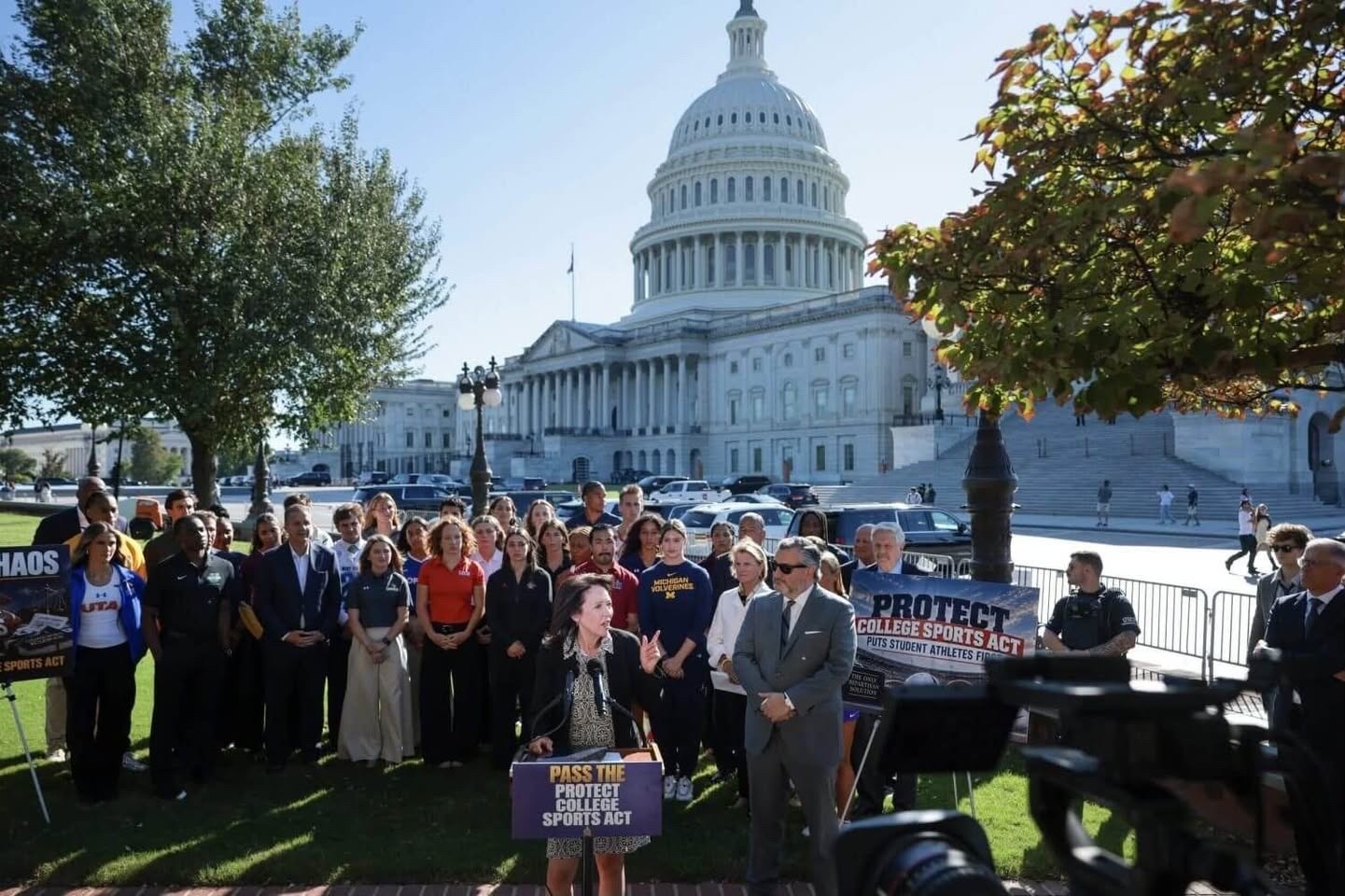
College athletes would gain federal protections for their scholarships, health care and endorsement earnings under legislation passed by the Senate. The proposal would also place new restrictions on player movement and protect certain compensation rules from legal challenges.
The Senate voted 77-22 on Sept. 28 to pass the Protect College Sports Act of 2026, moving college athletics closer to a national framework governing how athletes are paid, protected and permitted to transfer. The legislation still requires House approval and the president’s signature before becoming law.
Sponsored by Sens. Ted Cruz, R-Texas, and Maria Cantwell, D-Wash., the bill addresses some of the most consequential issues facing college sports: name, image and likeness agreements, athlete compensation, eligibility and the financial future of athletic programs. Its supporters say national standards would bring stability to a system operating under different state laws and evolving rules.
For athletes, the legislation would offer protections that extend beyond their final game.
Schools could not revoke athletic scholarships because of an injury or poor performance. The proposal would also guarantee opportunities for athletes to complete their degrees for up to 10 years after their eligibility ends, helping players whose athletic commitments interrupted their education.
The bill would provide coverage for sports-related medical expenses for five years after eligibility and limit athlete agents’ fees to 5%. Those provisions would address both the lasting physical costs of competition and the financial risks athletes encounter when negotiating endorsement agreements.
Supporters have also presented the legislation as a way to preserve opportunities outside the highest-profile sports.
Cantwell has warned that escalating athletic spending places pressure on universities and threatens the future of women’s and Olympic sports. Her argument centers on maintaining broad access to college athletics while preventing spending on major programs from overwhelming other institutional priorities.
Cruz has similarly emphasized enforceable rules, the preservation of traditional rivalries and protections against the formation of a breakaway super league. Supporters describe those measures as necessary to maintain the structure of college competition.
Alongside those protections, however, the legislation would establish boundaries on athlete compensation and transfers.
The bill would regulate payments from schools and affiliated entities while allowing qualifying name, image and likeness deals, commonly known as NIL agreements. Athletes could continue earning money through commercial endorsements and sponsorships, but the legislation would distinguish those opportunities from payments subject to its compensation framework.
Player movement would also face limits.
Athletes would generally receive one transfer between four-year institutions without losing immediate eligibility. A second transfer would ordinarily require sitting out the following academic year. Exceptions include a head coach’s departure, the discontinuation of a sport, graduate study or sexual assault or harassment.
The distinction matters for athletes weighing a change in schools: Their ability to compete immediately could depend on both their transfer history and the circumstances surrounding their departure.
Another major provision concerns the NCAA’s authority to enforce its rules.
The legislation would shield the NCAA, conferences and schools from antitrust liability when enforcing specified compensation, eligibility and transfer provisions. Antitrust laws generally prohibit agreements that unlawfully restrict competition.
That protection would not prevent athletes from bringing every type of lawsuit. The bill preserves certain legal actions to enforce its requirements and does not grant blanket immunity from all claims. It also remains neutral on whether college athletes should be classified as employees.
Those distinctions separate the proposal’s athlete protections from its broader consequences for control of college sports. Scholarship guarantees and medical coverage would create safeguards for players, while the liability provisions would strengthen the ability of athletic organizations to enforce designated restrictions.
As the legislation awaits House consideration, the debate extends beyond whether college athletes should receive compensation. Lawmakers must also determine who sets the terms, how much freedom players have to change schools and which rules they can challenge in court.
For athletes, the outcome could shape both the security of their college experience and their ability to turn athletic success into financial opportunity.