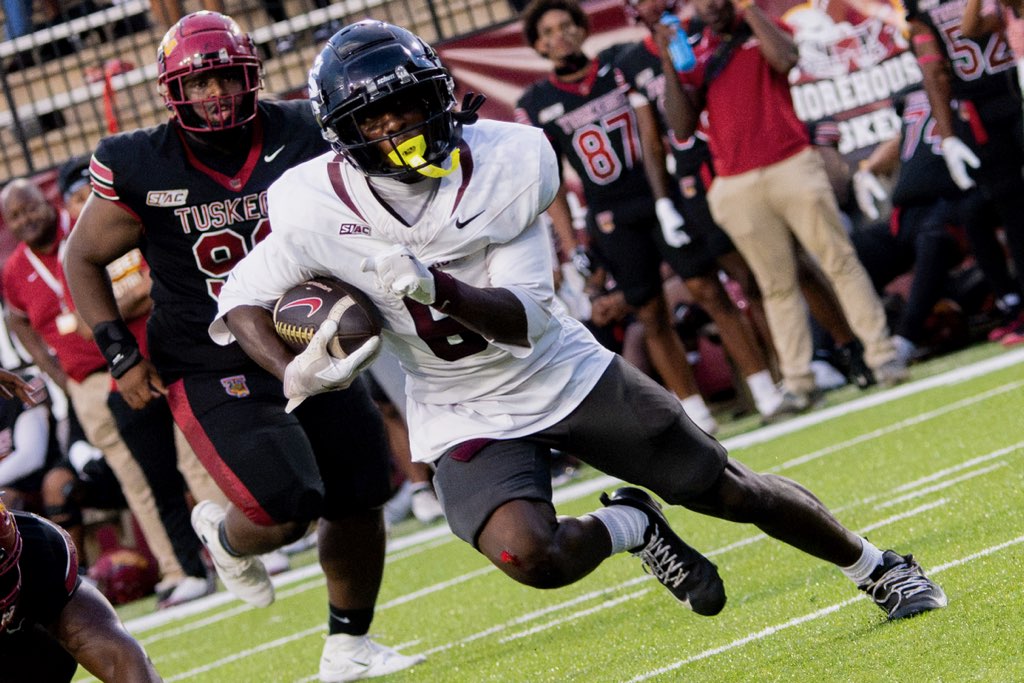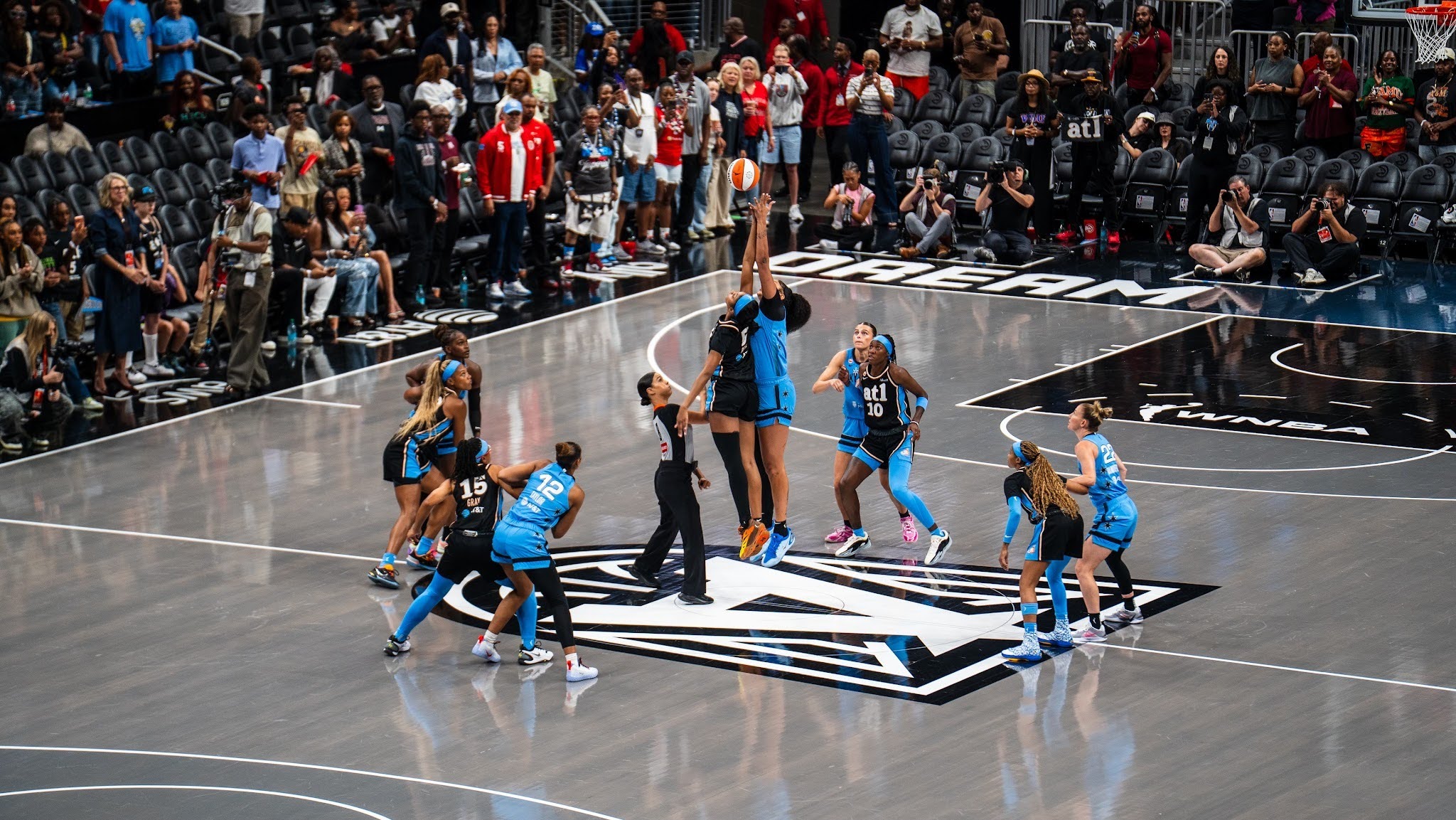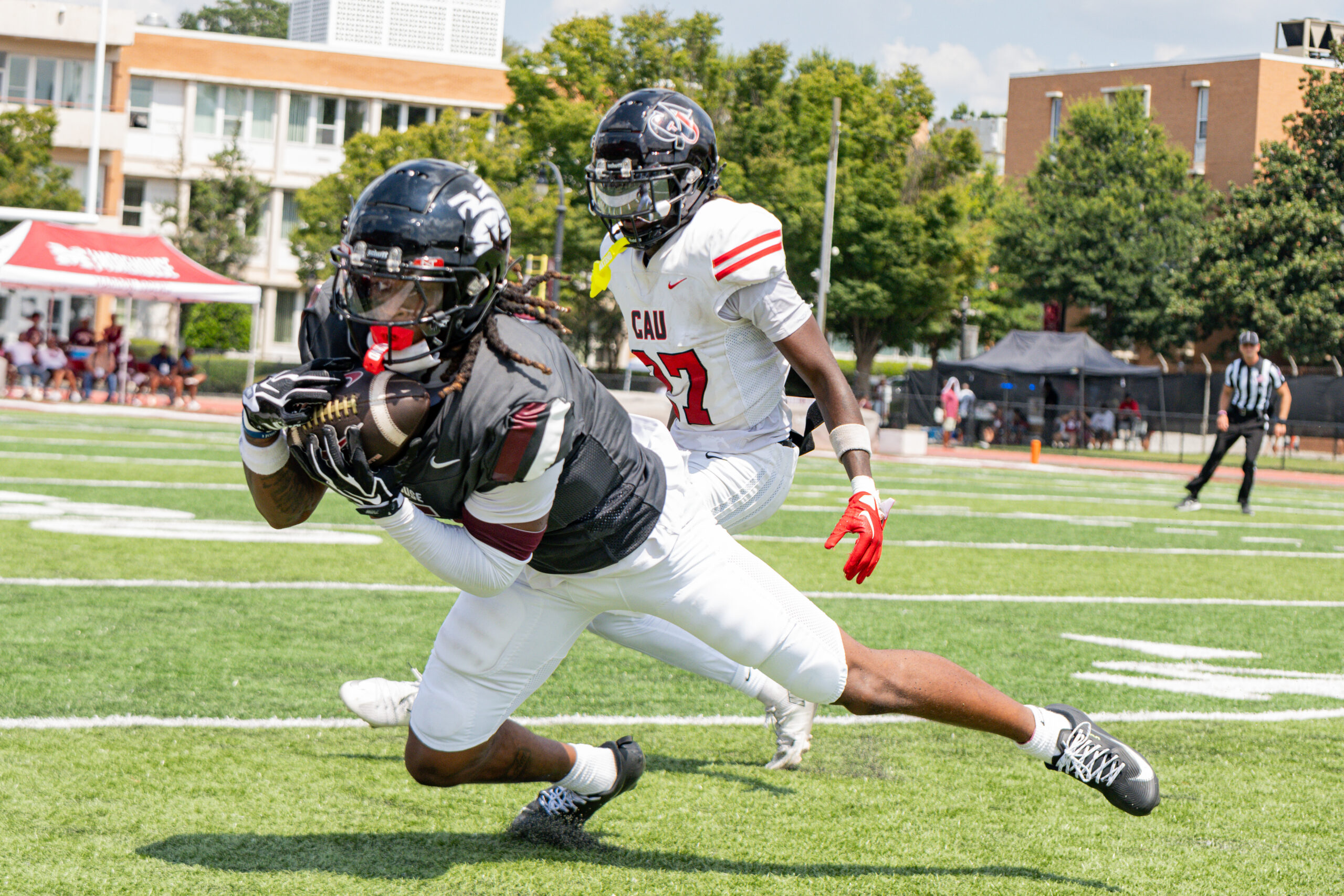





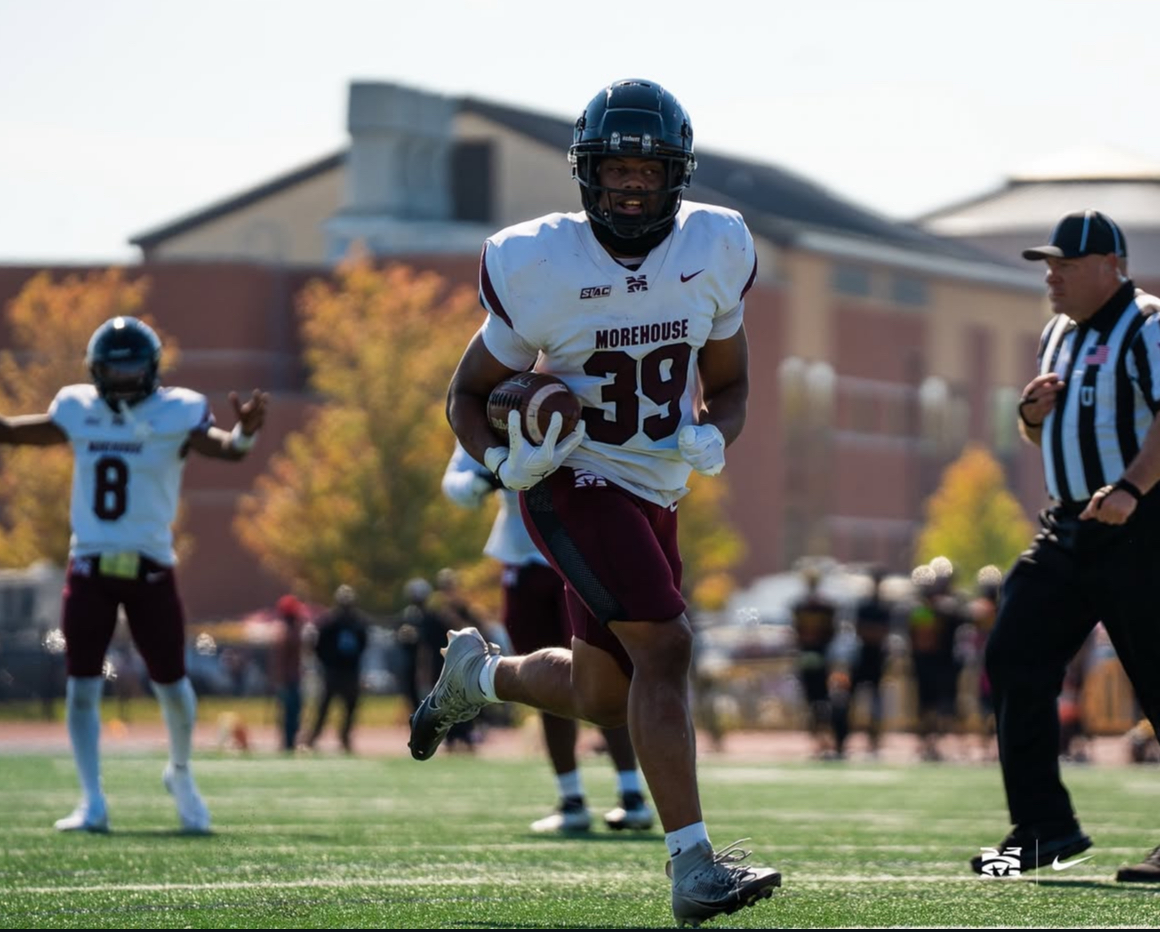
Division I sports could be the next chapter for the Maroon Tigers, but making that jump would take more than winning games. Morehouse College athletic director Harold Ellis ’92 made his Division 1 ambitions abundantly clear in an interview on the Inside the HBCU Sports Lab podcast on July 2.
“We are coming for these guys,” he said. “The SWAC and the MEAC, we’re coming.”
Howard University athletic director Kery Davis responded in an interview with HBCU Gameday on July 18, saying he welcomes Morehouse to compete in Division I athletics.
“I think they would be a great asset to Division I HBCU programs,” Davis said.
Morehouse currently competes in NCAA Division II as a member of the Southern Intercollegiate Athletic Conference (SIAC). A move to Division I would represent a significant shift for the entire athletic department, requiring the college to meet higher financial, staffing, scholarship and operational demands while determining where its programs would fit within the standards of Division I.
Here are five things Morehouse should do before moving to Division I:
1. Maintaining a stronger financial foundation
Moving to Division I requires more money, making fundraising one of the most important pieces to the transition.
The makeup of Morehouse Athletics is currently funded through three avenues: private donations, corporate and community partnerships and institutional resources.
As of late, the school has received donations from outside donors, such as HBCU Change and the Asbury Automotive group who made a $15,000 check directed towards the basketball team on June 23.
Alumni would need to play a major role. The school could create a sports-specific fundraising campaign that allows graduates who were athletes to contribute at different levels, from $100 to $100,000. Larger donors could be approached about sponsor patches on jerseys and long-term commitments, while smaller recurring donations could provide a dependable source of revenue.
Morehouse should also strengthen relationships with companies that already have ties to Atlanta and the college’s culture.
Maintaining partnerships with local brands such as Zaxby’s, Mercedes-Benz and Nike could be important, while companies such as Aflac and UPS could also become potential partners.
But corporate sponsorships aren’t the only answer. Morehouse could also turn to Atlanta restaurants, clothing brands, barbershops, dealerships, banks and Black-owned businesses for support. These partnerships don’t have to be worth millions. A network of businesses contributing $5,000, $10,000, $25,000 or more could add up.
The goal should be building a financial foundation that can support the program beyond the initial excitement of moving up.
2. Invest in players and facilities
One of the biggest challenges of competing at a higher level is attracting and retaining talent in both players and coaches
More athletic funding could allow Morehouse to offer stronger scholarship packages rather than asking players and their families to carry as much of the financial burden. If the goal is to play Division I sports, fundraising cannot only be about a new scoreboard or nicer uniforms. A major portion of funding should go toward providing athletes with the financial support they need to attend school while pursuing athletics.
This would also mean investing in great coaches just as much as players. Competitive salaries can help Morehouse attract and retain experienced coaches who know how to recruit, develop talent and build a winning program. Strong coaching would also help ensure that increased scholarship funding translates into better performance on the field and long-term program growth.
Facilities would also need an honest evaluation. The stadium, locker rooms, weight room, training areas, practice fields and recovery resources would all need to meet the expectations of a Division I program. That does not mean Morehouse needs to immediately build a $100 million football complex. Improvements could happen in phases, with donors and companies sponsoring specific projects.
The goal should be to create an environment that provides players and coaches with the resources to compete and recruits with a reason to choose Morehouse.
3. Build a Division I-caliber roster across all teams
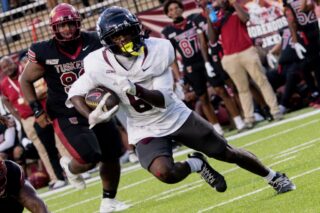
Recruiting would have to become one of the program’s biggest priorities. Since Covid in 2020, the football team has seen little success with a daunting 9-41 record. Their last winning season was in 2018 with a 7-3 record.
The transfer portal could provide one of the fastest ways to close the talent gap. Every year, talented players leave Football Bowl Subdivision (FBS) and Football Championship Subdivision (FCS) programs looking for more playing time, a different environment or another opportunity. Morehouse could target players with Division I experience, particularly those with connections to Atlanta and Georgia.
High school recruiting would remain just as important. Georgia consistently produces high-level football talent, and hundreds of players leave the state every year.
Morehouse should take advantage of its location by building deeper relationships with Atlanta-area high schools and selling recruits on the opportunity to play college football in one of the country’s biggest sports, entertainment and business markets.
The expectation is not to beat Georgia or Georgia Tech for five-star recruits. It is to identify the players who can help build a competitive roster and convince them that Morehouse is the right place to develop.
4. Make football matter beyond Saturdays
Division I football means little if the stadium is consistently half empty.
Morehouse would need to turn football Saturdays into events that students, alumni and Atlanta residents actually want to attend. Tailgates, student sections, music, local food vendors, alumni events and partnerships with campus organizations could make games feel bigger than football.
This could also mean creating a Kidzone where younger children feel like they are a part of the Morehouse experience.
Better attendance could also create additional ticket, concession, parking and merchandise revenue. More importantly, a packed stadium would make the program more attractive to recruits, sponsors, conferences and television partners.
That attention should continue beyond game day.
The media team plays a huge role in the level of exposure that the team gets. Morehouse needs to continue strengthening its football brand through behind-the-scenes content, such as player features, and by leveraging Atlanta creators and media outlets. Players could become recognizable personalities instead of names people only hear on Saturdays.
Before becoming a bigger sports program, Morehouse has to start presenting itself like one.
5. Have a long-term plan
The biggest question should not be, “Can Morehouse become Division I?” It should be, “Can Morehouse become a successful Division I program?”
Moving up without the scholarships, facilities, recruiting infrastructure, sponsorships and alumni funding to compete could hurt more than it helps. In the current college football climate, the biggest advantage D1 players have is the ability to get paid through NIL.
That means Morehouse would also need to create an environment where its athletes can benefit from their own names and brands. Atlanta provides a major opportunity because of its strong business community, large alumni network and national brands. Building relationships between players and local businesses could help Morehouse compete for recruits who may otherwise choose programs where NIL opportunities are already established.
If Morehouse athletes can’t even receive full-ride athletic scholarships, how would they be able to maintain a full roster at the D1 level?
Moving to Division I would mean competing against programs that can offer recruits significant financial support alongside better facilities, larger staffs and greater exposure. Morehouse cannot expect talented players to turn down those opportunities while also asking them and their families to take on a larger financial burden. Before making the jump, the school has to make sure it can financially support the athletes it expects to represent the program.
When you look at the Power-4 programs and even some mid-majors, it’s simply a bidding war for players. Morehouse would need a realistic, multi-year plan to fund the transition and eventually compete at that level.
Division I should be the result of building a stronger sports program, not the shortcut to becoming one.