

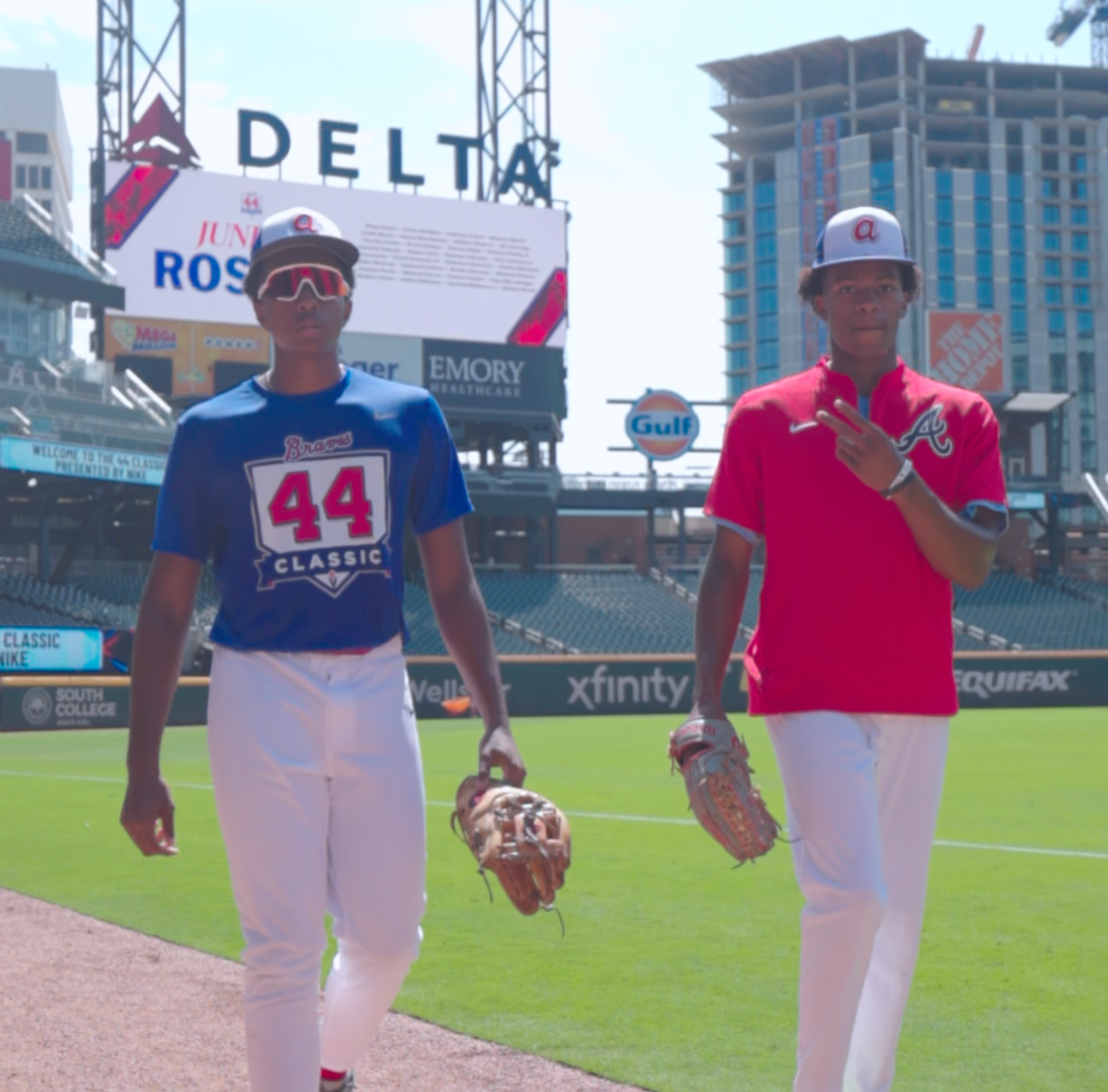
Under the lights at Truist Park, HBCU Night presented a version of baseball the sport does not always show.
Black families filled the stands as children wearing Morehouse and Spelman gear exchanged high-fives with alumni decades removed from campus. For a few hours, baseball looked like a game built for everyone.
For many Black children, however, that is not their everyday experience. Baseball has become one of the most expensive youth sports in America, and the barriers begin long before a player reaches a professional scout’s radar.
Daniel Mumphery knows that gap firsthand. A former two-year captain of the Morehouse College baseball team who now works for the Atlanta Braves, Mumphery understands the challenges Black athletes face while trying to advance in the sport.
“The biggest challenges, just off the top, truthfully, are cost and resources,” Mumphery said.
For families with limited disposable income, baseball expenses accumulate quickly. Players need equipment, coaching and opportunities to compete on travel teams. They may also need to attend showcases where college coaches and professional scouts evaluate talent.
“That cost really, really starts eating away and kind of drives a lot of our best athletes into other sports at times,” Mumphery said.
The issue is not simply paying for a glove or bat. Families are often paying for their children to be seen.
Travel baseball and national showcases have become unofficial gateways to college recruitment and professional scouting. Families that cannot afford tournament fees, transportation and hotel stays may find their children excluded from the development pipeline before their careers have a chance to begin.
Mumphery identified another barrier that makes the financial challenge even greater: access to the places where talented players are discovered.
“A lot of times, our Black players aren’t necessarily in the best spaces to be seen, which is one of the best ways to get moved up to the next level,” he said.
More organizations are creating programs designed to close that gap, but the imbalance remains. Mumphery believes middle school is one of the most important stages for keeping Black athletes involved in baseball.
“That’s kind of where the game grows and starts to get tougher and starts to get more challenging,” he said.
It is also when the cost of playing begins to rise. Athletes may need more advanced coaching, better equipment and stronger competition. For families already managing tight budgets, those expenses can push young players toward other sports.
Mumphery believes baseball organizations should concentrate their resources on helping athletes continue playing from middle school through the end of high school. Investment during those years could increase Black representation at the college and professional levels over the next decade.
Representation also influences whether young athletes remain connected to the game. On HBCU Night, the crowd at Truist Park reflected many of the communities these players come from. During an ordinary regular-season game, that level of representation can be more difficult to find.
Mumphery sees a direct connection between the athletes competing at the highest level and the children watching from the stands.
“Everybody knows, when you idolize someone, you kind of see yourself in them,” he said. “If you don’t have anyone to look up to at that level, it’s kind of hard to imagine yourself there.”
Former MLB outfielder Marquis Grissom views his career through that same lens. For him, reaching the major leagues created a responsibility to help the players coming behind him.
“Playing in the major leagues is great, but what are you going to do after that?” Grissom said. “My goal was to thank the people who came before me and to pay it forward to the next generation of kids so they’ll have an opportunity like I had through rec ball and travel ball to get to that next level, whatever it may be.”
Grissom believes Major League Baseball can make its greatest impact by supporting programs that keep Black children on the field. He pointed to MLB Develops, the Braves RBI program and the 44 Classic as examples of investments aimed at the stages when the sport often loses young players.
Greg McMichael, a former Braves reliever who now oversees alumni relations and helps grow the game for the organization, believes those programs should expose young people to opportunities beyond playing.
“One of the things we are really trying to help with, as we think about kids and point them toward college, is that we really want them to understand the fundamentals of the game,” McMichael said. “But also, not just playing the game, but being around the game. You think about all the different jobs and different things people can do to be involved in baseball and softball.”
That broader approach can introduce young people to careers in coaching, scouting, broadcasting, marketing, analytics and front-office operations—even if they never reach the professional field.
For Mumphery, HBCUs also play an important role in creating opportunities. He proudly recommends the HBCU experience to younger athletes, including his own future children.
“Going to an HBCU, it’s about more than just what you get on the field as an athlete,” Mumphery said. “It’s kind of about the overall development of a young person, especially for a young person in my community.”
Mumphery acknowledges that smaller schools often operate with fewer athletic resources, but he does not see that as a limit on what their players can accomplish.
“If you’re good, they’ll find you,” he said.
He expects the visibility gap to continue narrowing as professional organizations and scouts pay more attention to HBCU baseball programs.
HBCU Night demonstrated what baseball can look like when more people feel welcomed into the sport. The greater challenge is what happens during the other 161 games, and whether investments in affordability, access and representation reach Black players long before they have an opportunity to enter a major league stadium.