




Black bodies have always been valued for what they can produce rather than the humanity they possess, and professional sports is just a modern-day extension of that fact.
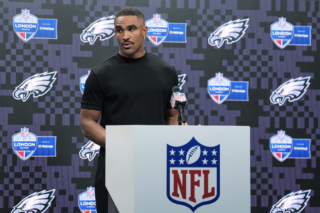
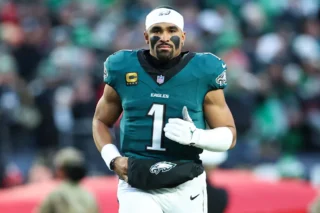
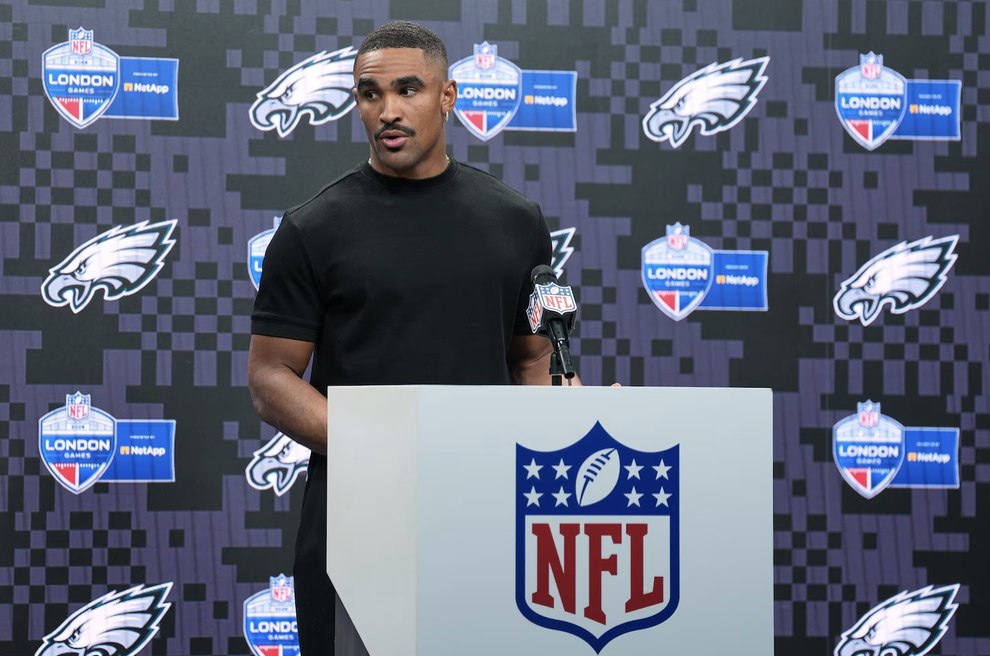
On Oct. 15, the Philadelphia Eagles released a statement saying their starting
quarterback Jalen Hurts would not play in their Sunday game against the Panthers. Michael Robinson, a former NFL player and current NFL analyst, reacted to the statement saying “He’s pulling himself out so it doesn’t look like it’s on me.”
Robinson suggested Hurts was faking his injury so a team loss wouldn’t fall on him. He then urged viewers to do research that would lead them to the same conclusion as him. He said “I would advise all of our viewers to go Google ‘superficial blood clot’ as opposed to a real blood clot.”
Just a few days later it was announced that Hurts would be out for the season because of his blood clots. He later apologized for his remarks. Now it is fair to say that Robinson should not have made those comments, but I think it raises a bigger question about how Black athletes are treated when their health interferes with the game they play.
As of right now Jalen Hurts is officially diagnosed with deep vein thrombosis in his left calf and bilateral pulmonary emboli in his lungs. Before doctors came to this conclusion, he was diagnosed on Oct.10 with a superficial blood clot in his calf.
Despite his injury, the NFL’s doctors cleared him to fly to London and play in a game the very next day. Flying for extended periods is a known factor that can worsen blood clots. Another factor is also trauma, the kind that can be caused by a physical contact sport like football. By allowing Jalen Hurts to play, doctors not only jeopardized his health but also his life.
Have we not learned anything from history?
Chris Bosh was a star NBA player at the height of his career in Feb 2015, until he was diagnosed with a blood clot in his leg, deep vein thrombosis. The blood clot later traveled to his lung, and he was diagnosed with bilateral pulmonary emboli. Does this sound familiar? He was hospitalized for multiple days; after being released, he played 53 out of 82 games in the NBA season.
In February 2016, Bosh was diagnosed with another blood clot in his leg. He was then forced to medically retire from basketball at the age of 31. Now in 2026 Bosh still deals with the issue of blood clots. In January of this year, Bosh suffered another pulmonary embolism that almost killed him. You would think that his story would serve as a cautionary tale, but 10 years later we see a similar situation that was handled worse than Bosh’s.
The National Football League (NFL) is a multibillion-dollar industry. The reason the league has grown to be so prosperous is because of its players. I do not think that it is a coincidence that a significant portion of its players happen to be Black.
These athletes give the best years of their lives, putting their bodies on the line for the entertainment of others. It can be easy for us as fans to see these athletes perform amazing skills and forget that, at the end of the day, they are human, just like us.
Humans get injured. Humans need breaks. Humans face mental health struggles. Black athletes face a stereotype that follows them from youth football all the way to professional. They are seen as naturally faster, stronger, and more resistant than their counterparts of other races. In the world of athletics this might seem like a good thing, but this stereotype also has a downside.
When Black athletes show any sign of weakness whether physical or mental they are harshly criticized, and their pain is denied. This is why Michael Robinson criticized Hurt’s condition, and this is why athletes keep their injuries a secret.
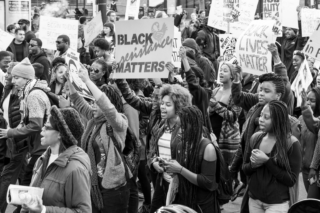
The exploitation of Black bodies is not a new concept. It is just presented in a different, more digestible way. Black bodies are now monetized, consumed, and celebrated by a worldwide audience.
During slavery Black bodies were property that was assigned value based on factors like strength, age, and performance. How much professional football players make is determined by these very factors. Instead of being sold they are traded from owner to owner or team to team. At the end of the day the players are not in control of how their bodies are used.
This is why Jalen Hurts’ situation is bigger than football. Hurts has put his body on the line for seven years. He has won the Super Bowl and Super Bowl MVP. But when he shows the slightest bit of vulnerability he is still scrutinized and questioned why? Black bodies are for more than just revenue.