




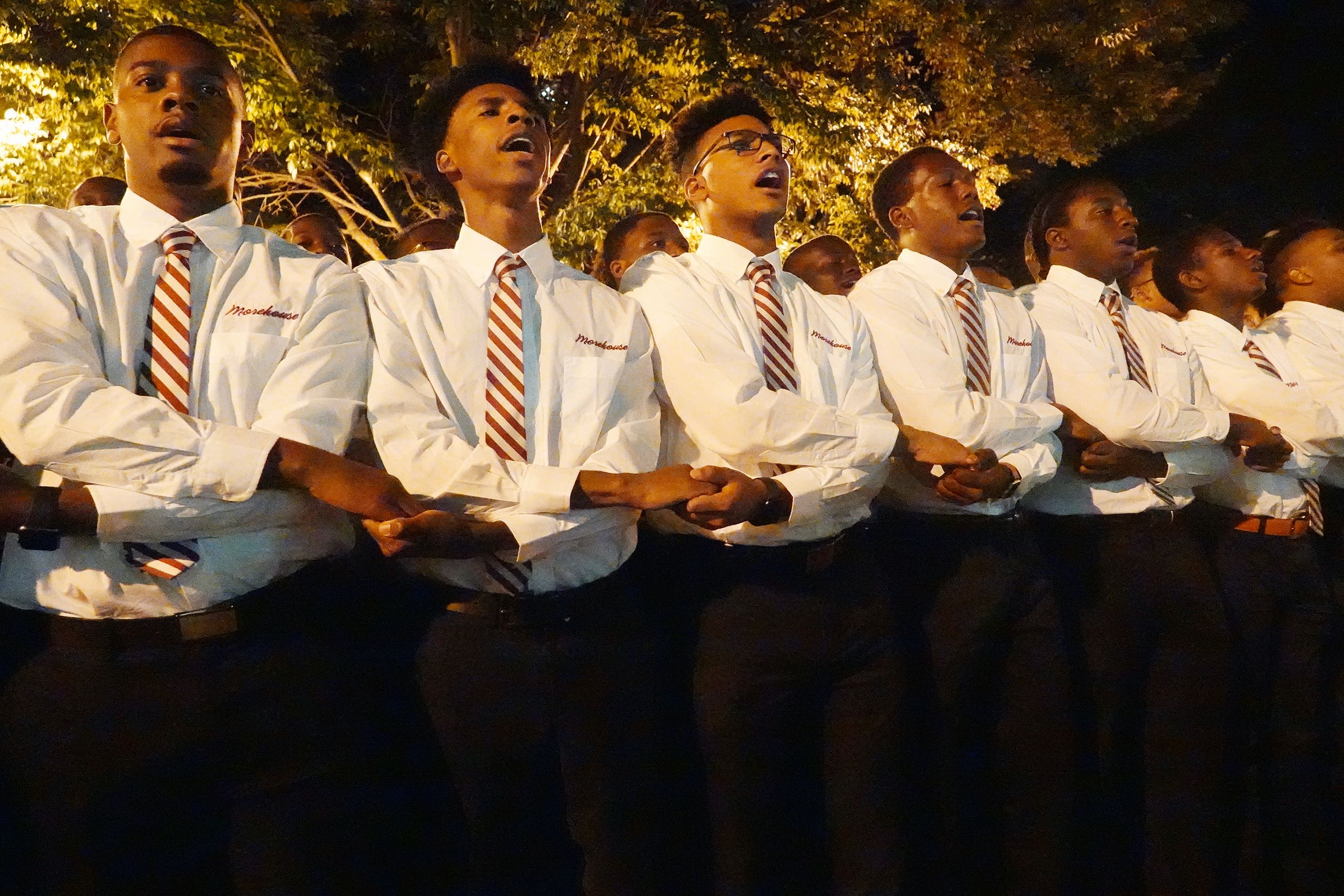
When freshman Harrison James arrived at Morehouse College, he did not have a clear picture of what a “Morehouse Man” was supposed to be.
James’ father graduated from the college. Still, James said he knew relatively little about Morehouse and its traditions before enrolling. At first, he assumed a Morehouse Man was simply someone who graduated from the institution.
A few months into his first year, that definition had already begun to change.
“We truly have to allow Morehouse to go through us and not just go through it,” James said.
For senior Devon Sheppard, the image was much clearer when he entered Morehouse — and much narrower.
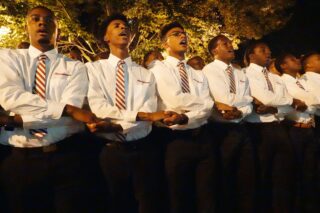
“When I first came to Morehouse, my understanding of a Morehouse Man was a man who wears a suit and exudes excellence,” Sheppard said.
He also imagined someone who was straight, polished and seemingly in control of every room he entered, an image he jokingly described as “very Martha’s Vineyard vibes.”
Four years later, Sheppard no longer believes the Morehouse Man can fit into one box.
The contrast between James and Sheppard reveals a question students encounter throughout their time at the college: Is becoming a Morehouse Man about learning how to fit an existing image or discovering how their own identities can expand it?
Finding an identity beyond expectations
For James, entering Morehouse without a strong understanding of the title gave him what he described as a “blank slate.” Instead of inheriting one definition, he began forming his own through experiences such as New Student Orientation, Welcome to the House and For Whom the Bell Tolls.
He quickly realized that attending Morehouse required more than showing up for class and passing exams. To him, the experience means using the relationships, resources and opportunities available to grow beyond who a student was when he arrived.
James’ understanding of identity also took shape before Morehouse.
Growing up in a predominantly Asian community, he said people sometimes told him he was not “Black enough.” That pressure led him to alter parts of himself to satisfy other people’s expectations of Blackness.
“I found myself creating a facade that wasn’t really my true self in order to please others,” James said.
At Morehouse, however, James believes students can find communities that allow them to discover who they are rather than conform to a single personality or image.
“Every definition of Morehouse Man should be specifically tailored to that Man of Morehouse,” James said.
For Sheppard, reaching a similar conclusion took years.
He entered Morehouse believing heavily in the polished image surrounding the title. He felt pressure to wear a suit and initially embraced that expectation. Over time, however, he began questioning what professionalism, masculinity and success were supposed to look like.
“I felt proud of the image of Morehouse men but also burdened by it,” Sheppard said.
Challenging the traditional image
As a gay student, Sheppard sometimes felt caught between his identity and traditional expectations of a Morehouse Man. He questioned whether those expectations accounted for queer and gender-nonconforming students whose expressions of identity may not resemble the conventional image.
By his junior year, Sheppard began to see masculinity differently. He became the first Black student to hold his internship position and helped establish the opportunity for future applicants.
Working alongside other queer people gave him a different model for leadership and masculinity.
“This taught me how masculinity looks different and how even being a different kind of man can be empowering,” Sheppard said.
The experience also showed Sheppard the importance of community, something both he and James emphasized despite being at opposite ends of their Morehouse careers.
Sheppard said Morehouse taught him that Black masculinity contains a wide range of personalities and expressions that popular portrayals of Black men often overlook. But he also believes students can face pressure to appear strong, composed and emotionally unaffected.
He would like to see more conversations that allow Black men to be emotionally honest. He also wants more resources for students whose identities, finances or circumstances fall outside what people often consider the traditional Morehouse experience.
“The best thing I learned about Black masculinity is how beautiful it can be with the right energy and right people and, most importantly, community support,” Sheppard said.
His definition of success has changed as well.
Sheppard said he once believed everything had to look perfect before success could arrive. His experiences taught him otherwise. When his parents lost their jobs, he still secured what became one of the most important professional experiences of his college career.
Sometimes, he said, progress comes not from appearing to have everything together but from having the confidence to ask for help, make connections and pursue an opportunity.
That realization also changed how he understands the Morehouse Man.
Sheppard still values the principles associated with the college’s traditional expectations, including being well-read, well-spoken, well-dressed, well-traveled, well-balanced, well-prepared and engaged with the world. What he rejects is the idea that those values must come packaged in one particular aesthetic.
“You don’t need to have a suit,” Sheppard said. “His most important attribute is his mind and how he uses it to impact the world.”
Sheppard believes newer generations of students continue to expand that image. He points specifically to queer and biracial students whose experiences introduce different cultural perspectives into conversations about Black manhood.
For students who worry they do not fit the traditional image, Sheppard sees that difference as an advantage.
“I would tell him he’s probably the most Morehouse man there,” Sheppard said.
He encouraged younger students to seek out people who understand them, take risks and resist isolating themselves simply because they have not yet found where they belong.
James is still at the beginning of that process.
For him, becoming a Morehouse Man means eventually leaving the college with something he could not have gained by simply attending classes and earning a degree. The transformation matters more than fitting an image.
Sheppard is approaching the other side of that journey. As graduation gets closer, his hopes have shifted from becoming the commanding, perfectly polished man he imagined when he first arrived.
Instead, he hopes Morehouse leaves him as “a man who knows a little more of who he is.”
“I hope it makes me into a confident, adaptable, kind man,” Sheppard said. “I also hope it makes me wealthy not just financially, but mentally, physically and within my community.”